



Building the future of digital commerce at Lowe’s
)
Lowe's Joe Cano and team building beds for children in need.
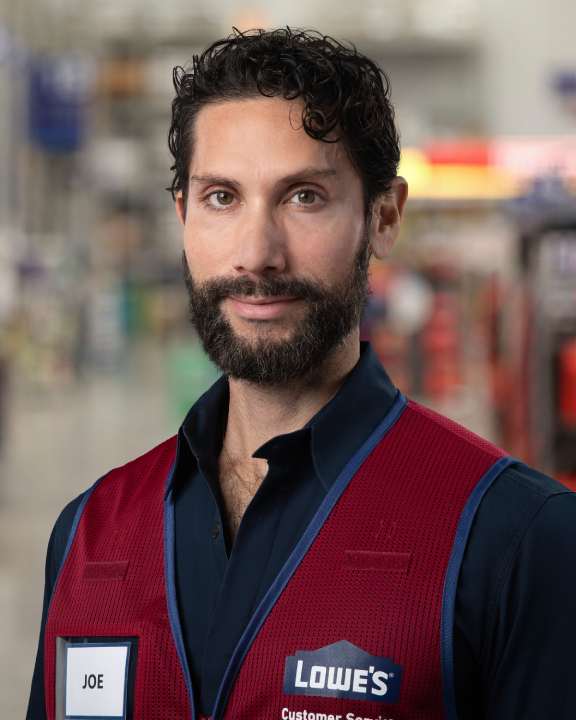
Joe Cano, Senior Vice President of Digital Commerce, Lowe’s
Digital transformation in retail is no longer optional, and few leaders have had a front-row seat to its evolution quite like Joe Cano, senior vice president of digital commerce at Lowe’s. With technology evolving daily and customer expectations rising just as fast, success comes down to one thing— staying relentlessly focused on the customer. That mindset has shaped every step of Cano’s career, with each experience reinforcing the same lesson: When the customer is at the center, navigating new business models and constant disruption becomes easier.
"... if you put the customer upfront in everything, it's very easy to learn a new business." Cano says. "You just have to always make sure that they're in the forefront of everything that you do."
Building a marketplace mindset
At Lowe’s, the opportunity for creating a new marketplace was clear from the start. Customers were searching for products that weren’t available, and the data revealed gaps in assortment that traditional retail models could not fill quickly enough. Marketplace became the solution, expanding product selection while maintaining control through a curated, closed ecosystem of sellers.
Introducing a marketplace model required a shift in how teams think about ownership, assortment and control. Success depended on clear communication and cross-functional alignment, helping teams understand that expanded selection enhances — rather than replaces — core business offerings.
Using AI to remove friction
Innovation at Lowe’s extends beyond assortment into how customers interact with the brand. New tools like Mylow, the company’s AI-powered assistant, help simplify the shopping journey. Whether customers are tracking orders, learning how to complete a project, or finding the right product, the goal is to remove friction and save time. AI is not about chasing trends but solving real problems.
A future shaped by speed and simplicity
Retail is poised to become even more streamlined, as customers begin to rely on digital agents to shop on their behalf, narrowing choices down to a handful of highly relevant options. In that environment, success will depend on mastering the fundamentals: the right product, at the right price, which is easy to find, and then fulfilled seamlessly.
In an industry defined by constant change, Cano says the most exciting part of retail is the unknown. New challenges create new opportunities, and for those willing to embrace them, the future is wide open.
"I love change." Cano says. "I thrive in the change because that's when, I would say the most innovation happens, when you're put up against, hey, we have this problem. We have this issue. Or you're learning an entirely separate new business coming in with a new lens. I love that."
Episode chapters
(00:00:00) From retail stores to digital leadership
How an early love for retail turned into a long-term career
What “customer obsession” really means in practice
(00:07:19) Launching Lowe’s Marketplace at speed
How identifying “white space” unlocked a major growth opportunity
Why marketplace is key to becoming a one-stop shop for the home
(00:10:13) How AI is reshaping the customer experience
Why Mylow is solving customer problems faster than humans
How personalization is changing the way people shop
(00:16:00) A leadership style built on trust and transparency
The philosophy behind removing barriers, not controlling execution
What it means to be a “learn-it-all” leader
(00:18:59) Inside the culture driving Lowe’s forward
Why customer-first thinking shapes every decision
The role of community impact beyond the business
(00:21:25) Staying ahead in a constantly evolving retail landscape
How to filter signal from noise in the age of AI
The difference between chasing trends and solving real problems
(00:23:51) A 10-year prediction for the future of retail
Why shopping agents could replace traditional browsing
What brands must do now to stay visible in an AI-driven world
Resources:
Become an NRF member and join the world’s largest retail trade association
Learn about retail advocacy at nrf.com/advocacy
Find more episodes at retailgetsreal.com
Read Full Transcript
This transcript is auto-generated and provided for reference purposes only. It has not been edited, proofread or reviewed for accuracy.
[00:00:32] Bill: Welcome to Retail Gets Real where we hear from retail's most fascinating leaders about the industry that impacts everyone everywhere, every day. I'm Bill Thorn from the National Retail Federation, and on today's episode we're talking to Joe Cano. He's the Senior Vice President of Digital Commerce for Lowe's.
[00:00:49] We're going to talk to Joe about Lowe's digital transformation and what drives him as a leader in the organization. Joe, welcome to Retail Gets Real.
[00:00:58] Joe: Thank you so much for having me. I'm really excited to be here.
[00:01:01] Bill: So let's talk a little bit about Joe before we get into some of the meat of what's going on at Lowe's. So your career background. What is your journey in retail?
[00:01:11] Joe: I got my start off early on in retail. So I worked retail stores growing up throughout high school, throughout college, everything from Pottery Barn, American Eagle, Abercrombie, and realized that I loved the retail aspect of it and didn't realize it was actually a career.
[00:01:25] So as I went through my career, did my hand at banking and investment banking and finance, and realized that was not necessarily the route that I wanted to go in, and realized, okay, what are some things that I love? I love shopping. I love helping people, and I actually love solving problems.
[00:01:40] Being in San Francisco, I had a lot of friends that worked at places like Levi's, or The Gap, and they said, you know what? You should try your hand out in retail. So I started off in retail at Hot Topic, if you remember that time.
[00:01:51] So very different kind of the landscape right now, but I worked throughout some teen and tween stores. I was at Forever 21 as well during their massive heyday and their buyout of Mervin's.
[00:02:00] And for me, I just loved retail because it is something different every single day. So from there, I got my chops on luxury. So I worked for Saks fifth Avenue, worked in merchandise planning, worked in buying, got into digital space and was running saks.com, which was such a fun and exciting time. Ran content, created site merchandising, regular merchandising. Even did finance, because I wanted to make sure how we got all the way down to the bottom line. So I was tired of my CFO saying, well, this is not EBITDA positive. I was like, all right, I'm going to learn this myself then. It was really, really fun and exciting.
[00:02:32] So was at Saks for a bit. Decided to try something new. Went to a startup called Jet.com. They're going up against Amazon. And then from there, Walmart purchased Jet.com. So I became part of a startup, but then also part of the number one retailer in the US, which was really fun and exciting.
[00:02:48] And then from there also went to Zappos, where I was the head of marketing, head of merchandising, and then head of our business development and kind of Amazon business model there. So also, really fun and exciting.
[00:02:59] The greatest thing about my entire career is I always love to be at companies that were very customer obsessed. So if you think about Zappos, they're a customer first. Hot Topic was all about knowing the customer, knowing the music they love, and giving them the right product as well.
[00:03:12] So all of these end roads really helped structure what my career is today and were perfect models of me joining a company like Lowe's. I hadn't been in home improvement before, but this is such an exciting space to be in.
[00:03:25] My husband's actually an interior designer, so I was from the outside and working on another portion of this, which has been really fun. So overall, I just love the customer obsession that Lowe's brings as well. And that's just been a really fun way for me to expand my horizons and understand a different type of customer base.
[00:03:42] Bill: That is a fascinating career journey. That's like a journey, journey, like global, around the world journey. I always say, and anybody that listens to the program knows that, I believe that the one constant in retail is change.
[00:03:59] Joe: Yes.
[00:03:59] Bill: And you can either embrace it and succeed with it, or you can fight it and you get frustrated by it, and then you have to go do something else. Man, you have done a lot in a very short period of time.
[00:04:10] Joe: Yes. One thing I love is, I love change. I thrive in the change because that's when the most-- I would say the most innovation happens, when you're put up against, hey, we have this problem. We have this issue. Or you're learning an entirely separate new business coming in with a new lens. I love that.
[00:04:25] It's so exciting for me because again, if you put the customer upfront in everything, it's very easy to learn a new business. You just have to always make sure that they're in the forefront of everything that you do.
[00:04:35] Bill: Yeah. San Francisco to North Carolina, wow. But obviously New York is in there somewhere too.
[00:04:43] Joe: New York and LA, yes.
[00:04:45] Bill: New York, LA, San Francisco, and we're in North Carolina?
[00:04:50] Joe: We're in Charlotte, North Carolina.
[00:04:51] Bill: Charlotte, North Carolina. Right. That's a big change.
[00:04:55] Joe: It is a very big change, but it's been a nice kind of a little more of a slower pace, which is great from a city perspective. But what I love is that in the work life, it's just as fast as pace because digital is changing, AI is changing, the internet is changing the way people actually talk to brands, find product.
[00:05:12] All that stuff is just an ever changing. And you have to consistently be on top of your game to make sure that you're offering the best possible case for your customers no matter how they try to ingress with your brand.
[00:05:22] Bill: I know I need to get to Lowe's real quick, but I'm fascinated by the fact that you've done all of these different things, and I would have to assume that each role that you've played in all of these different brands and companies, they've all contributed to the next step to the next step, into the next step. The things that you learned there, you can take with you, you can build on those. And have you found that in your journey?
[00:05:46] Joe: 100%. I think that every single role that I had or company or kind of change in that has really set me up for success for that next role. So when I was at Hot Topic, twilight was a huge thing. And I decided I'm going to capitalize as much as I possibly can. And there, so I was in licensing there.
[00:06:04] So that was actually really fun. And that taught me to say, okay, when there's a trend, you've got to go in with everything that you got because we don't know how long that's going to last.
[00:06:11] And then going into things like Forever 21 also, I was there in their heydays. So they were expanding stores, not just help me say, okay, how do we monetize some of this growth engine, but also make sure that we're looking at that horizon like two and three versus just this first horizon that's right next to us.
[00:06:26] And with Saks, that was something that was so interesting and fun because luxury is an entirely different beast. I was in designer ready to wear for a bit. And so I met all of my top books of customers in every single one of my stores to make sure that I knew exactly what they wanted.
[00:06:40] And then going into Walmart where it was just mass, where I'm like, okay, everyone wants everything, so we know what do we do and how do we get that? So that was kind of a marketplace push for us, and like, we can't handle all of this demand, so we need to actually get all these vendors in.
[00:06:54] So it's just been a really fun and exciting thing that taught me how to be a leader, how to work with problems that you have no idea how to solve, and how do you actually combat those? And then what do you do with what customers say versus what the market says versus what your finance people say as well. And how to culminate all that and building a strategy that's a winning one, which has been really exciting.
[00:07:14] Bill: Let's go to Lowe's. The Marketplace, the Lowe's Marketplace, that's a launch that you've been a big part of. What is that all about? What was it like to launch that Marketplace?
[00:07:23] Joe: This is so fun and exciting. So this is probably the fourth company that I've launched a marketplace with. And one thing that was a big portion of me joining as well is seeing a company like Lowe's that has been around for over 100 years is a store operational led focused company, to see them be so excited about launching something new like a marketplace, gave me great insights to say, okay, the leaders here want change. They know they need to change and they need someone that's going to help them operationalize that.
[00:07:50] So for Marketplace, the biggest thing that I saw was, look, Lowe's has some great product in stores, awesome assortment. And I had been a Lowe shopper even before I came at Lowe's. So I knew all of that as well. Home projects, you're in Lowe's three or four times in one week, getting everything right.
[00:08:06] So for me it was exciting to see that Lowe said, hey, there is some white space out there that we just aren't playing in. So how do we actually operationalize marketplace to give our customers what they want?
[00:08:16] So we went through null searches. What are people searching for they're not finding on lowes.com? And this is a great way for us to say, all right, people are shopping for X, Y, and Z. Here are the price points they're shopping for as well.
[00:08:28] And so we are selling everything, especially now, in the West we're selling portable AC units. In the East we're selling everything from duck and geese lawn ornaments to saunas and cold plunges, plethora of vanities, and faucets and all of these things that Lowe's is known for but stretching them out a little bit.
[00:08:50] And so I love this marketplace idea because it basically just says, hey, we want to actually service every single customer and give them everything under the home. We want to own that total home for you. So you can come to Lowe's and get anything that's underneath your roof or in your front yard, in your backyard. We want to actually be able to provide that for you. So it'll be that one-stop shop.
[00:09:09] And if you look at retail and where it's been, marketplace has been on a tear for a couple of decades now. And I think we were looking back, listening, learning what our customers actually wanted. The great thing is we have well overachieved our plan for last year.
[00:09:26] So the amazing thing is we had a strategy, we executed on it correctly, and the customers were voting for saying, yes, we love this product you're putting into the online, to the point where we're starting to meet with some vendors and saying, hey, do we actually bring some of these great selling items into a select amount of stores?
[00:09:40] And as it's echo we did at Walmart, which is really exciting for us because to get some of these smaller brands and make them into bigger ones by giving them an omnichannel experience, it's a win-win.
[00:09:50] Bill: I saw Marvin on CNBC the other day, and he is so fantastic. And we've been very blessed to have him involved and engaged in our leadership, our volunteer leadership at NRF. And he's inspirational. His story is inspirational. His vision for the future is inspirational.
[00:10:08] And some of the things that he was talking about, Mylow, he really stressed Mylow a lot. So I'm assuming that has been a great launch for you guys.
[00:10:18] Joe: It has been wildly successful for us. So if I look at what Mylow is doing is really just helping people solve their problem before they actually get to a human agent. Because I don't know about you, but I don't have time to make a phone call for 15, 20 minutes and explain my problem. I would love just to chat it out and actually get something back. So Mylow has been great.
[00:10:36] We've added a lot more into Mylow, so you can check your order. You can ask them how to paint your cabinets, how to build a raised flower bed. What plants actually would work within my area that I live in?
[00:10:49] I just moved to North Carolina. I don't know what survives here versus what survives in California. Very, very different type of plants that we actually have to plant. There's no palm trees in cacti anymore. It's more kind of hearty, plants, which I wasn't accustomed to or used to. So all those things are available within Mylow.
[00:11:03] So the great thing is when people interact with Mylow, they convert almost three x what a kind of normal conversion would be, which means we're showing the right product, we're showing them how to get their project done, everything from Spanish translation as well.
[00:11:17] So as an associate is walking in the store, with kind of the inverse of Mylow, which is for our associates in store, they can talk to Mylow and say, hey, I'm in rough plumbing and I need something that's going to fit X, Y, and Z part. And Mylow will give you back the answer. It'll actually would tell you what bay it's in as well.
[00:11:35] So it is so helpful across the board that our store associates are raving about it. Customers are raving about it. And every single week, we're just seeing like 30, 40, 50% user increase as we go on, because we're just adding in great features. We're looking if customers have a dead end, okay, how can we make sure that they don't have that dead end? What answers are they getting back? And we're personalizing that now too.
[00:11:57] So if you put something into Mylow versus me, it knows what my shopping behavior is and it might actually recommend something different. I actually just did this yesterday with the GMM and one of the vendors said, hey, I'm searching this, but it's only showing like my product. Did you guys mean to do that?
[00:12:11] And I said, well, because all you do on Lowe's is actually search for your own product. So yeah, we're going to actually push some of the product that you actually want. So I did in real time the same exact prompt, and it gave me something completely different. And he was like, this is so amazing.
[00:12:23] I'm like, this is how we talk about personalization and how that is going to really be a huge underlying kind of, let's say topic and thing that everyone's going to be talking about is how do you personalize all these things for you as a customer so you don't have to give so many prompts, ask so many different time, ask clarifying questions, like Mylow will know, which is awesome.
[00:12:43] Bill: So launching Marketplace, that's a pretty doggone big deal, and I have to believe that there were some challenges. It sounds like it was, you did it and it was wildly successful and you're building on it, but there had to be some challenges.
[00:12:59] Joe: Of course. Nothing is all roses all day long. So I'm going to talk a couple more great things and then I'll go into some of the challenges. So the great thing is miracle, which was one of our big partners here, we launched the quickest.
[00:13:10] And so a company like Lowe's that is so big and so complex and so cross-functionally heavy to launch like in three and a half months was amazing to see.
[00:13:18] Bill: Whoa, whoa. Three and a half months?
[00:13:21] Joe: Three and a half months from when we started to the end.
[00:13:24] Bill: No way. Wow.
[00:13:26] Joe: So that was lightning fast. So it showed me, okay, this company, if they rally behind something and the executives get behind it, it moves. Now where we do trip up is in the detail because as you can imagine from just a company culture, merchants own the assortment, and now we have this marketplace team and business development team going out and saying, okay, vendor, Spreetail or WiMAX, for going over, you're going to open up your entire assortment for a home improvement.
[00:13:52] And merchants have maybe a little bit less control about what they're seeing online. So of course, that becomes how are you choosing these items? How are we choosing these sellers?
[00:14:01] The great thing about us is we're a closed marketplace, so not every seller can just go on and get up and running on Lowe's. We've every single one. But I would say the biggest thing was that change management of saying, hey merchants, we have customer line of side.
[00:14:16] And after you talk and have office hours and just making sure everyone's aligned and getting that communication, that was a successful way for us to go about. But again, it's teaching and training everyone at the company to think differently, to say, hey, we are offering a huge assortment, but that's not going to degrade that first party, one P data that we actually have and those products that we have in our private brand products. We're still doing everything we can to promote those, but customers want a little more endless aisle within these categories.
[00:14:45] So again, all that back and forth has to happen. Some of it was great, some of it was like, hey, we've got to have three or four follow up meetings. But overall, everyone was really focused in on, hey, let's look at the customer lens and let's look at the competitive landscape. And that was a really winning way for us.
[00:15:00] But overall, we are still building, we are still trying to make improvements to our both sellers and our customers to make sure they have a great experience. So it has been very successful. Definitely a lot of bumps, but like anything, creating that change culture and saying, here's how we're going to operationalize this, here's how we're going to make this work for us if I need everyone to be rowing in the same direction. The twist and turns everywhere from finance to marketing, to merchandising, but overall, everyone is still on the same drum of this is for the customer's benefit, which is why everyone rallied behind it.
[00:15:32] Bill: That's awesome. Three and a half months. I'm not going to get over that one. It's great.
[00:15:36] Joe: We won an award.
[00:15:37] Bill: I'm literally in an organization that's like 100. We don't get things done in three and a half months. Radical chain in three and a half months
[00:15:45] Joe: Yes.
[00:15:47] Bill: It takes a lot longer than that.
[00:15:48] Joe: Yes. I totally understand.
[00:15:50] Bill: Incredibly impressed.,
[00:15:52] Joe: Thank you.
[00:15:52] Bill: Back to you a bit, Joe. Obviously, you can't do what you've done, you can't have the success that you've had, and you can't have the career that you've had unless you have really honed in your leadership skills. What is approach to leadership?
[00:16:10] Joe: So I'll tell you a little bit of a backstory of how I kind of shaped me as a leader. So, one, every time I have a new person that I report into, I take, here's the things that I love that they did. Here are the things I want to make sure that I'm not doing.
[00:16:24] And so for me, as I listened and learned throughout my entire career, I lead with transparency. I want everyone to know not only what we're doing, but why we're doing it. I lead with trust. I want my team to trust me to come to me to anything.
[00:16:38] The last thing I want is for people to skirt around and say, okay, well, we can't mention this in front of Joe, because he's going to go off the rails with this. And then I think the third is, having a strategy, setting the tone, and not being prescriptive about how people get there.
[00:16:52] There's many ways to get to a strategy or to accomplish your goals, but that's something that I really push on the team is I'm here to remove barriers for you. I'm here to clear the pathway for you.
[00:17:04] It's up to you to help execute, and bringing everybody along, and soliciting that feedback is really important for me. So again, all those things go into how I am as a leader. And I tell everybody this, if my door is open, feel free to come right in. And people do, and I love that.
[00:17:20] And it doesn't matter at what level they're at. I am not a levelist. The person that maybe just graduated college can come into my office and ask me any question that they want. And so all of that just leads to this openness culture where we all need to be doing the right things and moving in the right direction.
[00:17:38] And that's been very successful for me. And I also solicit the feedback of like, hey, you guys. Here's what I've learned in the past. Is this working? Is it not? We can change course. So probably, I have like two things that I always say. Fail fast and pivot and brick to forehead. And that just means, if you can't explain it to your grandma or your mom and they get it right the first one, then we've done something wrong. So making sure that everyone has that kind of nomenclature.
[00:18:01] And then I also have one that I use all the time is I'm a learn it all. I'm not a know-it-all. So being a sponge, consistently learning and developing yourself is really important for me and my team.
[00:18:12] We even started a book club for Lowe's to get people to think about AI differently, to rewire their brain a little bit differently. So we just finished the AI Driven Leader, which is one of my favorite books. Moving on to Rewire, I think, as our next kind of venture, which is McKinsey book, which I think is really great just to make sure that we're doing everything we can for our customers.
[00:18:29] Bill: I really do appreciate. The open-door policy is so incredibly important. In my office, my door is always open, and when it's closed, people stand there and look like, is there a problem? Is something wrong?
[00:18:41] And it is usually just because somebody left my office and closed the door, and I didn't realize it. But it's important and you know this because you've been into so many different places and worked for so many different brands, culture is everything. And so if you were to describe the culture at Lowe's, what is the culture at Lowe's?
[00:18:59] Joe: So I would say, the culture at Lowe's is, I would say one, looking at the customer first, and really driving results I think is really key to part of our culture. Having a little bit of fun is also key to our culture. And relationship building I think is huge here.
[00:19:15] Zappos was very relationship oriented, as well, and so is Walmart. And I love that because that just means, hey, I'm going to call someone and they trust me, they know me, they're going to help me push this thing through. Because being in this horizontal type of role, you have to use your influence a lot of and most of the organization to get something across the finish line. So for me, that, I think is a really big thing for Lowe's.
[00:19:40] And then lastly I would say is our culture's about community. And tomorrow I'm actually building beds in the morning. But something that we do a lot is train people that maybe are on hard times, to get them into a trade, whether you want to be a plumber or an electrician. So Lowe's sponsors all of this.
[00:19:56] We raise money for it, and then we build beds for thousands of kids each year, which is just so important for me, to say, okay, we don't only care about our sales and driving that, we also care about our communities that we serve, which is everyone in the US.
[00:20:10] So I think that's something that was just a great way as I was coming in and interviewing for this role and doing my research, I'm like, I didn't realize Lowe's did so much for the community, and that just gave me a, okay, they put their money where their mouth is and they also put their time and energy and effort. And that is just paramount for us.
[00:20:28] And some things that we also do, just to give you a little flavor of the kind of culture here at Lowe's, as officers, we work in stores as well. So you might see me at my local store. I was at Salisbury the past year where I worked in paint, worked in lawn and garden, and looked at the friction that we had. How can I better serve my customers?
[00:20:45] And so really that humility and that no ego is really important to the culture here as well, which I love. It's so exciting. You just get a bunch of people that are kind, that want to do the right thing, that are smart and they're just ready to beat that competition. And I think that's something that's really, really exciting.
[00:21:02] Bill: Yeah, and it starts at the top. You can see that with Marvin. The humility, the commitment to community, to his people, to the associates, to the people he serves, he oozes that. And all you have to have is just one conversation. You know that you're talking to somebody that is truly, authentically a great leader.
[00:21:21] And speaking of that, the learning side of it, you're in the area of, innovation is what retail is all about. We're constantly innovating. How do you stay on top of that? There's so much going on and particularly, and I hate to say it, we got through a lot of this conversation without using those two letters, A and I, which is shocking. But it's refreshing, because there's so much more out there than A and I, but how do you stay on top of all that innovation?
[00:21:53] Joe: Learn it all. I love podcasts. I love reading books. I love actually ingesting information. So, for I have a little group that I meet with, leaders throughout the US actually and in Europe. And we talk about what's going on in retail, what are they doing, what are they seeing just so I can see what other leaders are doing.
[00:22:12] But also I listen to the AI Daily Brief every single day. And that's my great wake up in the morning podcast so I can understand, okay, what is going on with AI today? And it's a daily podcast because it is changing so frequently.
[00:22:25] New releases can push one-- Claude is now better than Chat GPT for this. And then Chat GPT becomes, and then Gemini comes and like, we're better at imaging. There's so much data. I think for me as a leader, it's going with AI and saying, I don't want to create more problems or more friction for the customers. What can I utilize AI for to help accelerate my roadmap, to help accelerate removing customer friction or paper cuts from our customers.
[00:22:52] And instead of creating new things that maybe customers don't need or want, or kind of let's just say that shiny object syndrome that everyone gets in retail sometimes, that's a way for me to distill this down and say, okay, the problem is X, Y, and Z. Let's use AI to solve that and let's use that to accelerate.
[00:23:08] And that's what's been really successful for me is staying on top of what are the new trends, what is going on? Staying connected with my tech team here at Lowe's as well. And then just really making sure that we're out pounding pavement that we're meeting with all of these agencies and saying, okay, Open AI, what are you guys seeing? Okay, Google, what are you guys seeing? Okay, Claude, what are you guys actually seeing as well? Just so I can better round out my employees to say, we should be thinking about AI first and how we actually can accelerate that within our customer base.
[00:23:37] Bill: So AI, the customer, the associate, the business, retail. AI's playing a role across the board and in different ways. And I'm really curious as to what your thoughts are as to where you see AI impacting how retail serves its customers better and in 10 years-- who can predict 10 years? But I mean--
[00:24:03] Joe: I'll give you a hot take for 10 years. Yeah.
[00:24:06] Bill: Upright. Give me a hot take for 10 years.
[00:24:08] Joe: So I'll give you the 10 year and then I'll work back of what we're right now. So short term, long term. So long term I think people will be shopping via agents. I have an agent that does my travel, books it for me because I don't have the time.
[00:24:22] And that's one thing I think as I've seen internet progress, social progress, and AI progress, we are time starved. We always have been. Even just looking at my day, I'm like, okay, my calendar is booked from 8:00 until 5:00, and then I work on the rest of the stuff after that.
[00:24:38] So we might not have people coming to lowes.com or coming to retailer sites. They might be using agents. And so for me, I take a step back and say, okay, how can I get ahead of this? Because we might have 50% less traffic in 10 years, and it might be just be done through agents of like, hey, agent X, Y, Z, I need you to find me the best French door refrigerator that can be delivered in two days.
[00:25:00] And then it will serve us up three to five PDPs. And if you're not in those three to five, you've lost the game. Because people are not going to Google an endless scroll. They're not going to go into Google and read a bunch of things. We are going to be trained, to get that instant gratification of two seconds for someone else to actually crunch all that data for us.
[00:25:18] And so I go into what I like to call the it of retail. Have it, do we have the right product? Price it, is it priced competitively? Find it, are those keywords the right thing that you're searching for, onsite or offsite? Display it, how does that PDP look? Is all the information there for you to actually make that purchase? And then fulfill it. How we actually send that information to you. Do you want to buy online, pick up in store? Do you want to ship to your home? Do you want to actually get it installed? All those things make sense and matter.
[00:25:44] And if we nail those fundamentals now, once we get to that space, we will be the most crawlable. We'll actually have the best content. We'll have the best product, then we'll have the best prices out there. And I think that is how I see retail moving towards.
[00:25:57] Now, if you're redoing a kitchen, you might get some mockups, but you still will probably have to come into a Lowe's and say, hey, I need some help. I can't do this all myself. AI can't build you a kitchen, but it help get you in a couple steps to actually get there.
[00:26:08] So that's where I see in the next kind of 10 years where the retail industry is probably going to move towards. And how we're actually looking at that right now is biting a little, little chunks off, looking at things like visualizers, looking at things like vertical videos on PDPs and within our own website to say, hey, here's how creators have come in and shown us how you actually can do this great home project.
[00:26:27] And I think that trust is really important. So we're really trying to instill trust within our associates and trust within our customers to say, Mylow, and Mylow best Companion those are the two things that utilize AI. But I want you to trust in the system. They will give you the right answers that'll be helpful for you. And that's been, again, a good success story for us. So we're continuously leaning in there.
[00:26:49] Bill: Yeah. That is a short and long term, but it's exciting no matter how you cut it. So let me ask you this question as well, and since we're talking about 10 years, 15, 20 years, what excites you about the future of retail?
[00:27:03] Joe: So I know this is a weird answer, but the unknown.
[00:27:07] Bill: No, the unknown's a good answer.
[00:27:09] Joe: I love the unknown again, that's where I feel I thrive, is I don't know what's going to happen in the next two years, but I know that I'll be ready for it and I have the right team and the right processes in place so that we actually can attack whatever comes up.
[00:27:22] And I would say Lowe's, being at places like an Amazon, Zappos or a Walmart, they were so forward with their technology and I love how forward we are with our technology as well.
[00:27:32] Coming into this, I was almost worried about the tech posture of like, okay, is this going to be like a very slow-moving organization? Not at all. As I said, launching Marketplace in three and a half months, that's Herculean effort. And we did it. We at a company this size, it was amazing to see that the team rallied behind it.
[00:27:50] So I thrive in the unknown, and that's what I think is most exciting place to me because in two years retail landscape could look totally different. And I think constraint drives creativity. And that's what I love is like, okay, give me the problem. Let's go and solve it.
[00:28:07] Bill: Yeah. So I do want to ask you-- we have this rapid fire. I just want to ask you a question and then you just tell me the first thing that comes to mind. Best book you've read recently.
[00:28:17] Joe: The Geek Way.
[00:28:19] Bill: Who is your role model?
[00:28:21] Joe: Satya Nadella.
[00:28:23] Bill: Your favorite travel destination?
[00:28:25] Joe: Spain.
[00:28:26] Bill: Favorite inspirational quote, or a saying or a mantra that you always go back to?
[00:28:32] Joe: Be a learn it all, not a know it all.
[00:28:34] Bill: That's a good one. Joe, it has been an incredible pleasure talking with you. Thank you so much for joining us today on Retail Gets Real.
[00:28:43] Joe: Thank you so much for having me. Love the conversation, Bill.
[00:28:45] Bill: And thank you all for listening to another episode of Retail Gets Real. You can find more information about this episode at retailgetsreal.com. I'm Bill Thorne. This is Retail Gets Real. Thanks for listening. Until next time.