




How Old Navy is building opportunity at scale
)
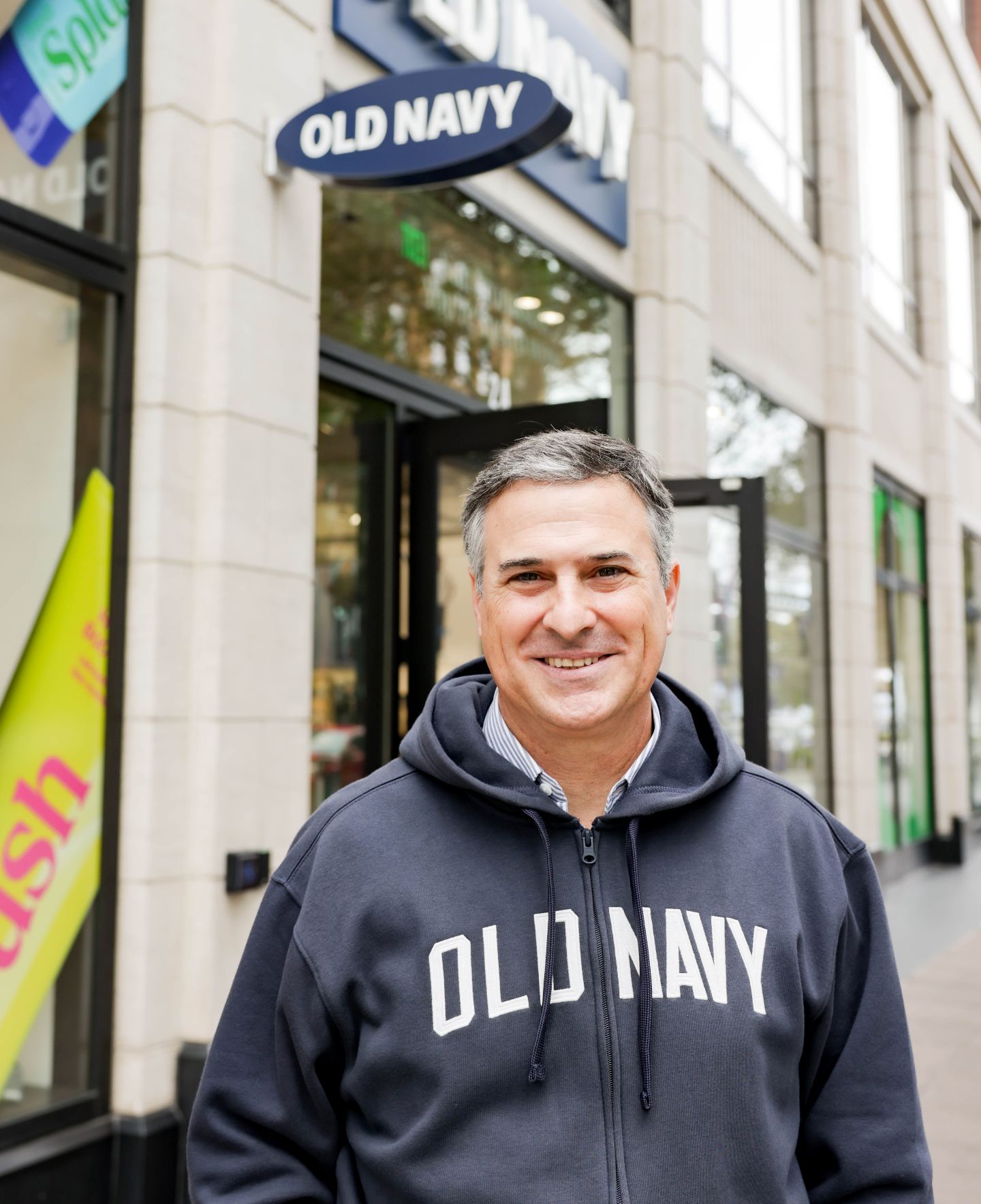
Horacio “Haio” Barbeito, President and CEO, Old Navy
Adaptability, collaboration and a focus on developing future talent are essential for long-term success in retail. Horacio “Haio” Barbeito, president and CEO of Old Navy, joins Retail Gets Real to reflect on a global career in retail, the responsibility of developing future talent and how leaders can navigate rapid change while keeping humanity at the center of the business.
With nearly three decades of experience spanning Argentina, the United States, Chile, Puerto Rico and Canada, Barbeito’s leadership philosophy was shaped by working across cultures and markets. His journey — which included 26 years at Walmart and CEO roles in multiple international businesses — reinforced an early lesson: Growth happens when leaders are willing to leave their comfort zones. Retail, he says, is never static. It demands constant learning, movement and responsiveness to customers whose expectations evolve at the speed of culture.
Developing leaders by embracing change
Barbeito says retail is uniquely suited for leaders who thrive in environments of transformation. With brands achieving near-universal awareness, the real challenge is staying relevant — continually refining product, experience and engagement to meet customers where they are today, not where they were yesterday. Retail’s pace, he says, creates a “healthy pressure” that keeps organizations sharp and leaders accountable.
That same mindset extends to his involvement with the National Retail Federation and the NRF Foundation. As a board member and advocate, Barbeito highlights the power of industry-wide collaboration in strengthening retail’s future workforce.
Creating opportunity through purpose-driven programs
Old Navy’s This Way Onward program is an initiative designed to bridge the opportunity gap by providing young people with their first job experiences. Barbeito says the program offers more than employment — it delivers mentorship, skill development and confidence to thousands of young people each year, many from underserved communities.
He says participants have used the program as a launching pad for higher education and long-term careers, reinforcing the idea that retail often serves as the first step in a much larger professional journey. These outcomes, Barbeito says, are not just good for society — they make strong business sense by investing in the future workforce.
Leading with people at the center
When asked what motivates him, Barbeito points not to numbers or titles, but to people. Seeing teams grow, talent advance and individuals realize their potential is what fuels his leadership. Retail, he believes, offers a rare privilege: the ability to shape lives through opportunity, learning and meaningful work.
The episode also touches on the rapid emergence of artificial intelligence and its implications for retail. While acknowledging both curiosity and uncertainty, Barbeito underscores the importance of thoughtful adoption — leveraging technology to enhance productivity while preserving the human connections that define great retail experiences.
Episode chapters
(00:00:00) Building a global retail career through change
Why moving across markets accelerates growth and perspective
What retail teaches leaders about adapting at the speed of culture
Why staying relevant matters more than brand awareness
(00:06:16) Creating first jobs that change lives
Why retail often becomes a defining first career experience
How opportunity programs open doors far beyond the store
What it means to invest in talent with long-term impact
(00:10:26) Why investing in people is smart business
How opportunity programs strengthen the future workforce
What truly motivates leaders after decades in retail
How people-centered leadership drives brand momentum
(00:13:20) Navigating AI without losing the human touch
How fast AI adoption is reshaping work and customer experience
The tension between technological speed and thoughtful leadership
Why it’s okay not to have all the answers yet
(00:19:14) Advice for the next generation of retail leaders
Why learning is no longer limited by your employer
What it means to be a lifelong student of retail
Resources:
Learn more about Old Navy’s This Way Onward program
Become an NRF member and join the world’s largest retail trade association
Learn about the NRF Foundation, at nrffoundation.org
Learn about retail advocacy at nrf.com/advocacy
Find more episodes at retailgetsreal.com
Read Full Transcript
Episode transcript, edited for clarity
[00:00:01] Haio: I think my advice is, see this not only as an amazing opportunity to do good, but also, it makes business sense. We’re preparing the young, up-and-coming workforce, and retail is such a great learning ground that even if they don’t stay and they decide to do something different—
[00:00:23] Bill: Welcome to Retail Gets Real, where we hear from retail’s most fascinating leaders about the industry that impacts everyone, everywhere, every day. I’m Bill Thorne from the National Retail Federation, and on today’s episode, we’re talking to Haio Barbeito. He’s the president and CEO of Old Navy. We’re going to talk to Haio about Old Navy’s opportunity program, the impact he’s seen and how he stays current in an industry of rapid change. Haio, welcome to Retail Gets Real.
[00:00:50] Haio: Thank you, Bill, very much. Such an honor and a privilege to be part of this conversation. Of course, being close to NRF, that does so much for our industry and allows us to really be current to everything that is going on in our fascinating world of retail.
[00:01:06] Bill: It is a fascinating world, and you’ve had a fascinating career. So let’s just start right there. We were talking before we started recording about the fact that you’ve had a couple of opportunities, and some of them around the world. Tell us about your career journey.
[00:01:21] Haio: This is my 30th-year-anniversary in retail. Almost 27 of those years were with Walmart, the last three-plus years, with this privilege of leaving Old Navy. And I started my career in Argentina where Walmart actually started there with a greenfield startup. And I was supporting Argentina then a little bit of the support of the Brazil and [inaudible] Walmart.
[00:01:44] And after a few years I was invited to have an experience from working at the headquarters in Bentonville, Arkansas. And I worked there for three years. Moved to Puerto Rico, which was a strong business for the Latin American region, even though it’s part of the U.S. territory.
[00:02:02] Back then it was part of international, which by the way, Old Navy, that’s a great business there in Puerto Rico as well. Then came back to Argentina because we’re growing again. Got really the privilege to be named CEO of Walmart, Argentina, February of 2012. Then moved to Chile in 2015 where Walmart had bought DNS, a great retailer there and what Chile is part of the portfolio today.
[00:02:27] And so, again, in the southern [inaudible] there, but moved to Santiago. Then had the privilege in 2019 to move to Canada to lead the Canadian business that, as you would know, as a former Walmart [inaudible] I build, is a great market for Walmart and where great talent has gone through.
[00:02:45] And it’s really, have been a great exporter, also talent to different Walmart markets. And then in August ’22, I had this amazing honor and fun to lead such an iconic brand like Old Navy, and having just an amazing time leading the Old Navy team.
[00:03:06] Bill: It is an amazing company, and you’re doing an extraordinary job. The facts are in the numbers and the numbers are great. So that speaks worlds to your leadership. But what was an experience or a lesson early in your retail career that helped shaped where you are today?
[00:03:22] Haio: So very early on, Bill, I think because I, probably, had been on exchange tour in the U.S. when I did my high school senior year and then came back to my home country of Argentina, I always had this desire to be in the global arena.
[00:03:39] And then when I found the possibility of developing myself in retail, just being able to move around, be exposed to different markets, different cultures, really different customers, it was such a great experience and a great opportunity. So early on, I really valued the fact that it’s not about being static in one place, but moving around and be constantly learning, and retail, as you know, never stops transforming.
[00:04:09] And that has been something that I have always taken with me, and I use many times, developing by moving around as a really amazing trait. I always recommend and suggest to up-and-coming talent to be willing to actually leave your comfort zone and go discover different operating environments.
[00:04:28] Bill: It is amazing. You’ve moved quite a bit, and I will tell you, when I was growing up, my parents moved quite a bit. And it’s the challenge. To your point, it’s really stretching yourself and being open to change. And in retail, and I’ve said it many, many, many times, anybody that’s listened to this podcast knows, retail is all about change.
[00:04:50] And if you can accept the change and if you can run with change, and if you can succeed with change, you belong in retail. If you don’t like change, if you’re afraid of change, if you are cautious about change, then this probably isn’t the industry where you want work. And I think that you’ve shown that if you are willing to make the change, adapt to the change, it can take you to places where you never even imagined you’d go, which is a great thing.
[00:05:18] Haio: And I think, especially now when the customer actually moves so fast, the culture moves so fast. And you probably heard Richard [inaudible] so many times repeating that we need to move at the speed of culture. And I think it’s an amazing call to action in terms of— because you can reach amazing awareness, and in the case of Old Navy, 94, 95% awareness.
[00:05:42] I always ask some audiences when I come to talk to people, raise your hand if you have bought something at all Old Navy, Gap or Banana Republic. Or I flip that, and everybody almost in the audience raise their hand. But it’s not only about awareness. It’s actually staying current, staying still relevant. And I think that retail puts that healthy pressure of not being able to never relax, right?
[00:06:08] Bill: Right. Yeah, for sure.
[00:06:10] Haio: Always finding new ways to actually have a better experience or delight with product, or actually different forms of going to market. So it is really fascinating. And that’s the reason when you go into retail, the changing environment is permanent and it becomes really attractive. You never do something statically in time for too long. You go with an amazing flow of where the customer is coming.
[00:06:36] Bill: Yeah. So, your engagement with the National Retail Federation, you serve on our board of directors. We’re grateful for that. We’re privileged to have you as a part of that, and we always are learning from our leaders, of which you are one of a very special class. But you as a company have been supporting the NRF Foundation Rise UP Partner of the Year award.
[00:06:58] And you have your own opportunity program called This Way ONWard. How are you seeing these programs impacting lives? Can you share some stories, maybe, that you’ve heard or witnessed firsthand about how these programs are helping people?
[00:07:14] Haio: Yeah. I think this is probably the part of the business that makes us the most rewarding, I would say. Old Navy has always been committed to bridging the opportunity gap, but the program, This Way ONWard, will actually allow us to be that first job that you never forget. And this year alone, 7,000 youth have gone through the program. And as you know, Bill, you never forget your first job.
[00:07:42] Bill: No.
[00:07:43] Haio: And we want to make that first job an amazing first lasting impression. So this is a program where we partner with organizations like The Door in New York, but also with Boys and Girls Club of America, which by the way, Old Navy was recognized at the beginning of the year as the Partner of the Year for [inaudible]. We’re doing this for 31 years now.
[00:08:11] And I told my team when we were very proudly sharing the recognition with them, that was the best recognition that we could get. And these are, in many cases, underprivileged youngsters that joined our workforce with a learning agenda.
[00:08:30] And just a few days ago, we had what we call the Magic Awards in our headquarters in San Francisco. We had one of This Way ONWard representatives sharing her story, and she’s about to go— she started in UCLA in September after being part of This Way ONWard during last year.
[00:08:51] She’s a freshman in UCLA, and just sharing that with entire audience it was the best moment of that award ceremony. So really something that gives us a lot of pride and reminds us how important is for our youngsters.
[00:09:06] Bill: I will tell you, the Gala and the foundation of the work that the Foundation does, it is one of my favorite parts about the Big Show, and these personal stories that these people tell about the opportunity that has been presented to them through their work in retail, what they’ve learned that— and as you said, you can ask that question. How many of you, was your first job in retail? And half plus more of the room raises their hand.
[00:09:35] My first job was at McDonald’s, and I took away from that one saying that has stuck with me all of these years. And there’s a lot of years between then and now, which was, “if you have time to lean, you have time to clean.” And that came from Ray Kroc personally. So it’s a tremendous opportunity, and I think what you’re doing makes a huge difference.
[00:09:54] You’re such a well-known and recognized brand, and you’re a cool brand. There’s a lot of brands that people would be like, “Ah, I’m not going to admit that I actually worked at that.” But they’re very excited to say that they worked at Old Navy.
[00:10:05] You’re taking leadership in this space. What would be your advice to other retail leaders who are interested in advancing this kind of initiative that you have through This Way ONWard?
[00:10:17] Haio: I think my advice is, see this not only as an amazing opportunity to do good, but also, it makes business sense. We’re preparing the young, up-and-coming workforce, and retail is such a great learning ground that even if they don’t stay, and they decide to do something different, is that, as you just mentioned, so many people start in retail and get their first hands-on experience being out there, serving customers, and doing their first professional steps.
[00:10:54] So I think that it’s just about, embrace these kinds of programs or put them together. Give them their own company flavor. But it’s just about investing in the future work, investing in the title of the future.
[00:11:11] Bill: You get up in the morning. What motivates you? Again, you’ve had such an extraordinary career. You’ve achieved an awful lot in your young life. What motivates you, Haio? What gets you up in the morning?
[00:11:27] Haio: This is my personal opinion. Nothing motivates leaders more than seeing your team thrive or talent that you have helped and contributed to develop to be promoted, to get additional responsibility to actually unleash your potential.
[00:11:42] So, I believe that really is people at the center— employees, customers. Employees being unleashed or customers being delighted or satisfied. That will give me a lot of joy, a lot pride, and something that you renew your energy day in and day out. And I think many leadership books and everything talk about the leadership regrets, but I like to think that retail leadership gives you this amazing privilege of this first job or developing talent or attracting talent and take them to the next level.
[00:12:23] In growing businesses or markets, with amazing privilege of actually giving these professional opportunities to up-and-coming talent. And I think that gives me a lot of energy, a lot of pride. Very proud of team Old Navy on some of the improvements that we have delivered in the last few years. And that comes, yes, with a brand that actually a lot of people love. But also, the teams that you put together and really support them, catch their energy and unleash them to go do what they need to do to really take the brand forward.
[00:13:00] Bill: Based on your experiences, you’ve learned a lot through the years. I’m sure that you’ve applied each time you have an opportunity to take that learning and move forward with it to apply it somewhere else. But what is something you’d like to learn more about, something that, if you had the time, you’d like to learn more about?
[00:13:21] Haio: Obviously, what everybody probably will first answer about this is AI and the impact. Really, the true impact that has in the challenge that we have in teams, to adapt, to re-skill, to learn, and how is the next generation of talent going to integrate into the industry, as we move forward in an environment where AI is going through many areas of industries.
[00:13:52] So obviously learning more, but also being part of this change in how we work, in how we optimize resources, in how we go to market. I think that is all always very interesting, but in many cases, our uncharted territories.
[00:14:09] Coming back to the first conversation of being exposed to different operating environments, this is one that not only I have curiosity, but a little bit of leadership anxiety, I would say, of actually how do we really make it work and have this intersection of amazing technology and incredible humanity? How do we move forward in a world that is bringing us incredible revolutionary ways of working?
[00:14:38] Bill: The whole concept of AI, and I’ve said this before, but to me, the same thing is trying to grasp that the universe is infinite. I can’t grasp that. How can something be infinite? Something has a beginning. Something has an end. Something has a start. Something has a finish. Can’t be infinite, but it is. I accept it.
[00:15:03] I just can’t get my head around it. I’m having a hard time getting my head around AI and all the implications that it has for the future. We’re just so nascent in this technology and its application to our lives, to our professional lives, our personal lives, to our communities, to our countries, across the board. And it’s exciting, but at the same time, it’s hard to grasp how this all shakes out.
[00:15:28] Haio: But Bill, during the digital revolution, it would’ve been a podcast. They would probably be viewing this in a similar way. Oh my God, where’s the future going to bring? Of course. But in reality, to be fair, the digital revolution had 200 years after it to adapt and globalize and all that. Today, the times are just extraordinary fast.
[00:15:53] So back then it was centering the UK and then it was slowly going around the world. Now, AI is in every single current of the world. Even though many people speak about the new industrial revolution, I think it’s a much faster, more— it is just meteoric.
[00:16:15] So it is something that obviously is in every leader’s mind on how to grasp with it. But I think we need to give ourselves a little bit of room to— it’s OK not to have all of the answers. I think it’s around, look, acknowledging that this is a revolutionary technology.
[00:16:37] So how do we, I say, move with the speed, but without rushing into making sure that you actually optimize AI for your business model, for how you want to go to market, for how you want to serve your customers and how you want to actually bring productivity to what you do? But also, it is about freeing up some unproductive time to actually dedicate more to where the human time matter the most.
[00:17:04] Bill: Yeah. We were fortunate, Haio. We both were in our professional lives as the internet really took center stage. And to see the growth of that, to see what the implications the internet had societally, what it had for us as professionals. But again, to your point, the internet, it still took a little time, and not everybody has access to it.
[00:17:29] AI, however, I think is really something that is moving so fast. But to your point, you got to figure out how you’re going to use it. Don’t avoid it, but at the same time, don’t rush into it. Make sure that you do it all.
[00:17:44] Haio: Many times, especially when we talk about tech in retail is, how is the adoption happening? To your point, what you said everybody. So adoption in these tools, they have never seen faster adoption.
[00:18:02] But I’m sure that the Don Fisher never imagined that, and now we had this amazing business that happened over many years. Actually, this is our 30th anniversary of being in ecommerce. Gap brand, 30 years ago, launched Big Box. So we got to a very interesting place, but it took us 30 years, right?
[00:18:23] Bill: Yeah, yeah, yeah, yeah.
[00:18:24] Haio: So we have this, again, environment, healthy pressure of actually being on the edge on this kind of technological breakthroughs.
[00:18:37] Bill: Yeah. So I could go on forever and ever. I have incredibly enjoyed this conversation, but I do want to end with one question for you, Haio, which is, if you could give one piece of advice to the next generation of retail leaders, what would it be?
[00:18:54] Haio: And it’s not based on my experience, but I truly [inaudible]. If you do have the opportunity to actually experience going to different markets and see different realities and see how customers behave, you always bring new best practices into your business. And the other one is, I think in the past when I started in this industry, we had to go to our classes, at our courses to really learn.
[00:19:28] Right now learning, if it’s to be, it’s up to yourself. The number of places where you can go to actually study your industry, in our case retail, is incredible. The amazing content, if it is a party, if it is groceries, if it is general merchandise, if it is convenience, if it is internet, if it is big stores, if it is ancient markets, you can have all at your disproportion.
[00:19:59] So I would say be your own student of what you want to learn and what industry you want to grow because it is really not, anymore, dependent on actually the company that employs you. It has to do a lot with what you want to actually study and learn and accomplish.
[00:20:20] Bill: Yeah. Haio, it has been a real pleasure talking with you and thank you for joining us today on Retail Gets Real.
[00:20:26] Haio: Thank you, Bill. My pleasure.
[00:20:28] Bill: And thank you all for listening to another episode of Retail Gets Real. You can find more information about this episode at retail gets real dot com. I’m Bill Thorne. This is Retail Gets Real. Thanks for listening. Until next time.