




The evolution of outlet shopping in a changing retail landscape
)
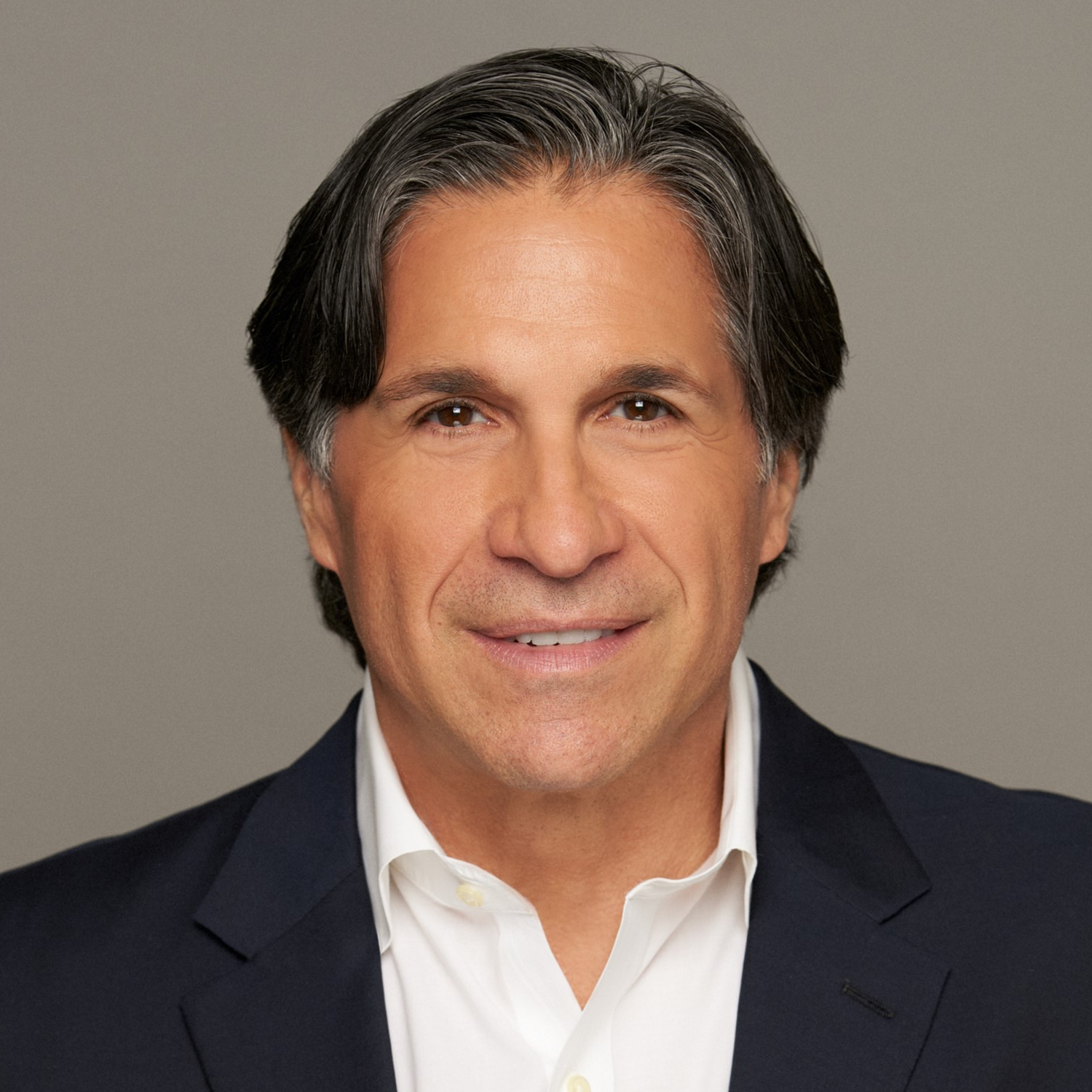
Stephen Yalof, CEO of Tanger Inc.
Outlet shopping has come a long way from its origins as a place for manufacturers to sell excess inventory. Today, consumers are looking for much more than a deal, and Tanger is evolving alongside them. Stephen Yalof, president and CEO of Tanger Inc., joins Retail Gets Real to discuss how shopping centers are becoming entertainment destinations, the resilience of today's shoppers and why the future of retail is still very much rooted in physical experiences.
From factory outlets to lifestyle destinations
The outlet industry was built on a simple idea: give consumers access to great brands at compelling prices. While value remains at the core of the business, today's shoppers expect more from a retail visit. Yalof traces the origins of the outlet industry back more than four decades and explains how Tanger has adapted to changing demographics and consumer behavior.
As more people moved closer to outlet markets following the pandemic, the company saw an opportunity to serve customers beyond the traditional weekend shopping trip. That shift led Tanger to expand its offerings with restaurants, entertainment venues, beauty retailers, fitness concepts and other experiences that encourage customers to visit more frequently.
"We're life-styling our outlet centers," Yalof says.
The strategy is also shaping Tanger's growth. Recent acquisitions of open-air lifestyle centers complement the company's existing portfolio while building on the same strengths that have made outlet centers successful for decades.
Understanding today's value-conscious consumer
While economic uncertainty continues to influence consumer spending, shoppers remain remarkably resilient. Tanger's core customer is aspirational, seeking favorite brands and quality products while still wanting a strong value proposition. That mindset spans income levels, with even higher-income consumers increasingly looking for opportunities to stretch their dollars.
The key is not simply offering the lowest price; customers want a clear connection between a brand's value and what they're paying. The strongest brands are finding ways to connect with consumers wherever they choose to shop, maintaining a healthy ecosystem across full-price, online and discount channels
Leadership lessons from a career in retail
Yalof's career has spanned some of the biggest names in retail, including The Gap and Ralph Lauren. Along the way, he developed a leadership philosophy centered on listening, empowering teams and making decisions quickly.
"The worst thing that you could hear as a leader is somebody saying, 'That person is out of touch,'" he says.
He believes great leaders create environments where people feel heard, while also having the confidence to make difficult decisions and adjust course when necessary.
Listen to the full episode to hear more about the evolution of outlet shopping, the future of open-air retail destinations, and the leadership lessons that have shaped one of retail real estate's most accomplished executives.
Episode chapters
(00:00:00) The evolution of outlet retail
How outlet shopping began and why it transformed retail
Why today's strongest brands rely on multiple sales channels
(00:05:17) Reimagining the outlet experience
How consumer behavior shifted after the pandemic
Why Tanger expanded beyond traditional outlet shopping
(00:09:13) Understanding today's retail consumer
Why value means different things to different customers
What keeps customers coming back (beyond great prices)
(00:12:38) Leadership lessons from the top
Why listening is a leader's most valuable skill
How customer feedback can shape better decisions
(00:15:36) From dealmaker to CEO
How leadership requires a different mindset than selling
The challenge of stepping off the field and building a team
(00:18:33) The three notes rule
Why reading the room matters before speaking up
How gratitude can strengthen professional relationships
(00:22:08) What excites Stephen Yalof about retail's future
Why technology remains retail's biggest opportunity
What retailers can learn by walking the store floor
Resources:
Become an NRF member and join the world’s largest retail trade association
Learn about retail advocacy at nrf.com/advocacy
Find more episodes at retailgetsreal.com
Read Full Transcript
This transcript is auto-generated and may contain errors.
[00:01:00] Bill: Welcome to Retail Gets Real where we hear from retail's most fascinating leaders about the industry that impacts everyone everywhere, every day. I'm Bill Thorn from the National Retail Federation, and on today's episode we're talking to Stephen Yalof. He's the president and chief Executive Officer at Tanger. And we're going to talk to Stephen about the evolution of the outlet experience and what's next for the company. So, Stephen, welcome to Retail Gets Real.
[00:01:27] Stephen: Thanks for having me on.
[00:01:29] Bill: So you have quite the background. You've had a wonderful career. You've done multitude of things. What has that career journey been? Tell me about that.
[00:01:38] Stephen: Interestingly enough, I started leasing outlet shopping centers about 30 something years ago in the early '90s when I would say that that was really the boom days of outlet. They were known as factory outlet back then, because it was the manufacturer direct to the consumer.
[00:01:54] Bill: Correct.
[00:01:55] Stephen: At that time it was-- department store was the principal means for these individual manufacturers to get their goods in front of the consumer and factory seconds. Department store returns. They needed something to do with the excess.
[00:02:14] And interestingly enough, Tanger was founded almost 45 years ago because Stephen Tanger, his father, Stanley Tanger, Stanley's father Mo Tanger was a shirt manufacturer, creating shirts and they had their facility in Greensboro, North Carolina because that's where most of the textiles were back in the days.
[00:02:35] And they were selling to a number of department stores under private labels. And every quarter they would open up their factory to friends and family to sell the excess runs or the product that didn't pass the quality check.
[00:02:52] Bill: Sure.
[00:02:52] Stephen: And an industry was born. They grabbed a bunch of different manufacturers from Greensboro, the folks from Contour, which is Lee and Wrangler, and a number of flatware goods, linens and things like that. And they opened up a shopping center in Burlington, North Carolina. And that was really the first outlet center. And since then they've been rolling ever since.
[00:03:17] Bill: Well, you've been in retail. Certainly you've been on that side of it, but retail is the business. You look at where we are today and where we've been and we can talk a lot about where we're going and I know that we're going to have to somehow weave AI into it, but where do you think retail is today in terms of its health and its growth?
[00:03:37] Stephen: So I think retail is a very important channel, and that's a big question because as we think of retail, when we think of retailers, we think of their ecosystem. And their ecosystem in order for a retailer to be successful today, they're selling into department stores. They've got an online presence. They've got a full price, street and mall presence, and then they also have that off price or discount presence.
[00:04:04] And that ecosystem is critically important to the brand and the brand's evolution and the brand's survival. Because whether it is sell through their full price channel and clear through their discount channel or meet a new customer through the discount channel that they might never have met in the full price channel, that ecosystem's critically important. And the top retailers that we talk about today play in all of those different verticals along that ecosystem.
[00:04:33] Bill: Every time I've been to Tanger, it's really interesting because I feel like that they all are somewhat unique and look, and you look around at the customers. We had talked earlier before we started about the location at West Palm Beach and then the location up at Daytona.
[00:04:51] It's a good mix. You've got a lot of different people, and it just seems to me that it's a good cross section. There's no one-- it seems to me one demographic that's out there shopping at Tanger. So my question to you would be, who is it? Who is it that's shopping out these days?
[00:05:10] Stephen: If I were to come up with one word that describe the bulk of our customers, it would be aspirational. It's a consumer who is looking for their favorite brand, they like fashion, but they're looking for that entry price point that's a value price point for them. In the outlet business, it's not about what percentage off of your full price you are, it's about the perceived value that the customer is getting when they interact in your store.
[00:05:43] So there are brands that aren't successful in the outlet space because the customer doesn't understand the brand or the price value relationship, but there are other brands that could be 30, 40 off, and it's the greatest value in the center because the customer understands the difference between that full price and what they're getting.
[00:06:03] And when they know they're getting a real value inside the store, that's that aspirational customer. That's the customer interaction, and that's what makes our business so successful.
[00:06:16] Bill: So you just opened a new location, I believe it's in Ohio, near Toledo. And you're always evolving. This is retail. You're always looking at the newest changes, the newest things, the newest technologies. How is that location different than some of your other locations, since that's your newest?
[00:06:33] Stephen: Sure. And we were founded as Ally Company and we've been outlet since 45 years. When I joined the company, and I actually started in April of 2020-- so if you take a second and think about where you were in April of 2020, we were--
[00:06:48] Bill: I know exactly where I was.
[00:06:50] Stephen: We were 40 shopping centers, 15 million square feet, 3000 stores, and everything was closed on my first day at work. Needless to say, it's been quite the journey to get everything reopened. But with getting them reopened came a reinvention of our business. We realized very early on that the customer that was moving to these geographies where our outlet shopping centers were, typically were a tourist.
[00:07:14] You had to jump in the car, you had to drive 40 miles in the old days to get to an outlet center. Now all of a sudden demographics shifting post COVID, people working from home, we're finding more people moving to that second home community.
[00:07:28] And the population growth. We talked about Savannah before we started this call pool where our shopping center is in Savannah is one of the fastest growing population bases in all of Georgia.
[00:07:39] Bill: Yeah, I know. I've seen the traffic, Stephen. Getting off the interstate is impossible.
[00:07:46] Stephen: Right. There's so much traffic. Nobody shops here. But it's one of those things where what we learned from that is that in order to get that customer, it's not just a value seeking customer that's coming out for that great Saturday shop with their friends.
[00:08:02] Now all of a sudden, we've got a big local catchment that we're catering to. And because of that, we need to be more things to more people because we want to get that weekday shopper visit. We want to get the multiple visit that week. So we started introducing new uses to our centers.
[00:08:16] Some full price businesses like Sephora's a great example. Here's a category we didn't have in the outlets. Here's a brand that wants to expand and they want to put their brand in front of the-- in the centers, in the geographies that have the most amount of customers. And they found our locations in a lot of those markets.
[00:08:34] We also added food and beverage. We added entertainment. And in some instances, we added more service-oriented businesses like gyms and museums and things like that. So it was a full entertainment, destination for that local consumers as well as the tourist consumer.
[00:08:52] What we learned through that experience, we say internally we're life styling our outlet centers. And as we thought to expand our footprint and with there not being that many outlet centers available on the market for us to buy, we went after lifestyle centers because we felt we had the muscle to execute in that space as well.
[00:09:15] But the center that you just referenced, which is Levis Commons in Toledo, Ohio, or the Perrysburg suburb of Toledo and all the fundamentals of a center that we know how to own, operate, lease, and market. So that was our fourth, open-air lifestyle shopping center. Our program is to not turn them into outlets as much as it is to take our outlets and add more lifestyle uses to them.
[00:09:44] Bill: That's really interesting. And I love the outdoor concept, obviously, and I think post COVID, people like the outdoor concept as well. And there are certainly areas where that it gets really, really cold in the wintertime, but I think where you are located in many of your outlets are, or your investments are, it's in a climate that really facilitates the outdoor shopping experience.
[00:10:11] Now when you look at the consumer, I think you mentioned this earlier today on another program, you said that they were resilient. How do you see the consumer evolving with all of the things that are going on right now? What are your concerns? What are your observations?
[00:10:27] Stephen: Well, let's start with the concerns first. There's so many unknowns out there. Have they resolved the crisis in the Middle East? Have they not resolved the crisis? Are gas prices going to go down? Are gas prices going to go up? So there's a lot of things that our consumer is worried about.
[00:10:42] We talk about this K shaped economy where the bottom of the K is really suffering a lot more than the top of the K in that there are household items that these families need in order to just survive day to day. And those consumers aren't necessarily spending as much as those on the other side of that K, and we're highly sensitive to that.
[00:11:08] Although our customer, I said before, was aspirational, they're not commodity driven. They're not looking for the T-shirts at the best possible price. They want Gap, or they want polo or they want American Eagle. So that level of customer, I think, is a little less sensitive to the current economic climate.
[00:11:30] And that's where they're proving to be a little bit more resilient. On the other side of the K, what makes things really interesting, particularly in our off price business, is we're finding that there's a lot of wealthier consumers that still want their favorite brand at the best possible price.
[00:11:46] And we've made it far more convenient for them to shop off price than ever before. You no longer have to get in the car and drive 50 miles outside the city to find an outlet environment. We're much closer in because we've been able to build them a little bit closer, but just as importantly, I talked about earlier that demographic push. Our customers are moving closer and closer to our shopping centers.
[00:12:11] Bill: Yeah. I think that part of it too is that the consumer today is a consumer that's been through a lot and I think that there are consumers that can afford to shop in a number of those brands at their stores or their locations, but prefer to go to the outlets to find the deal, to get the product that they want at a price that they want to pay and save a little bit of money and make it stretch that much better.
[00:12:35] And so I think that when I shop there, that's exactly what I'm doing. I know what I want, and I would prefer to pay a lower price, and you make it very convenient, easy for me to do it because it's very convenient and easy to get to. So you're talking to me, Stephen.
[00:12:52] Stephen: And if I can give you a better sit-down restaurant experience when you're there or if there's a movie theater on site, or if I have a loyalty program that gives you even more rewards for your loyalty shopping with us, I'm just adding extra incentive to make sure, not only do I get your business, but I keep your business and I try and convert you and get you to come back a little bit more frequently.
[00:13:14] Net promoter score is critically important to us, and that's basically that one question that we ask our customers. How likely are you to tell a friend to come and shop with us? And we've seen a great climb in our net promoter score since we've added a lot of these alternative non-traditional outlet uses to our format.
[00:13:34] Bill: That's pretty fantastic. So you wouldn't be where you are, you wouldn't have gotten that opportunity in April of 2020 if you weren't a really, really good leader. How do you define a good leader, particularly in this space?
[00:13:49] Stephen: Two things. Number one, listen. You can't make decisions unless you understand what's going on out there. And I think I've become a really good listener. I've got great people who are very willing to share their opinion whether I've asked for it or not. I've got a team of people who are probably tops in their profession and I rely very heavily on their point of view.
[00:14:16] I read, I listen, I ask a lot of questions. And I think that that's number one. You need to understand what's going on out there. The worst thing that you could be as a leader is hear somebody say, oh, that person is out of touch. I want to be as in touch as possible. And the best way to do that is to create an environment inside my own organization where people know, not only can they speak, but they're going to be heard.
[00:14:46] But also make sure we're taking advantage of the people external, whether it's reading Yelp reviews or it's listening to people at a dinner party that want to volunteer their information. Mickey Drexler used to say all the time, for every one person that gives you an opinion, multiply it by the 50,000 people who would give you similar advice, but just don't have the access.
[00:15:10] And I think he's right. So I listen very intently to those who are willing to give me feedback about our business. The second thing, to be a good leader is to be willing to make the decision. You got to make the call.
[00:15:24] Bill: Right.
[00:15:24] Stephen: You can have great advice on your left shoulder, and on your right shoulder, but at the end of the day, great leaders make decisions, and hopefully you're right more than half the time. But at least you made the call because I think we hear the phrase analysis paralysis out there all the time. And I think that happens because you're constantly sending people back to do the next thing. It's like the Wizard of Oz. It's like, all right, so you got the shoes. Now go get the broom.
[00:15:53] It's like at what point do you actually make the call? And we find that we are a group of people empowered to make decisions. I don't make every decision in this organization. I empower the people that work for me to make decisions, and similarly, they empower those that work for them to make decisions.
[00:16:11] I think speed is critical, particularly in today's market. And we want to make the call and move on. And oh, by the way, if we made a mistake, let's fail fast and let's course correct. But it costs a lot less money to fail fast and cost correct than it does to take a year and miss the whole opportunity.
[00:16:33] Bill: Yeah. So you're sitting in class at GWU, here in beautiful Washington, DC and you're thinking about your future. Did you see yourself becoming a CEO? Was that your goal?
[00:16:45] Stephen: Honestly, no. My mom and I we get together for dinner every once in a while, and we both get a big kick out of the fact that I have this fancy title, because I'm not a very fancy person. And what's interesting, it's, I'm the kind of person I grew up in the leasing business. I've always been transactional.
[00:17:09] I go back to GW every once in a while, and I'm talking to kids. And in fact, I mentioned to you dear before we came on, I gave the commencement to the George Washington University Business School this year.
[00:17:20] Bill: Awesome.
[00:17:21] Stephen: And I gave them some advice, but one of those pearls of wisdom, if you will, was learn how to sell. Selling is a skill. You can learn how-- gift of gab. Yeah. That's probably harder to teach somebody or real interest in people. Yeah, that might be hard to teach too.
[00:17:40] But there are selling skills that you can learn that is the difference between making a deal and not making a deal. And look, I became a student in it. Not only that, it was just one of those things that for me, I thought that was going to be my entire career was going to be on the sell side.
[00:17:58] And I've got great friends in the real estate business that have made fantastic careers at a selling you never really wanted I don't want to say leadership roles, but management roles.
[00:18:08] Bill: Sure. Sure.
[00:18:09] Stephen: Because it takes you off the playing field.
[00:18:12] Bill: Right.
[00:18:12] Stephen: So I found myself coming off the playing field. My transition from Gap to Ralph Lauren was one where at Gap, I was one of 35 people making deals in my territory. Happened to have been New York City at a time, the late '90s when khaki swings and Gap was at its heyday, kind of what we're seeing now with Gap.
[00:18:35] When I got the job to go to Ralph Lauren, at the time it was just an outlet business, but they wanted to grow their full price business. So that required me being-- transactional real estate person but then building a team of other transactional real estate people that took some of that work off of my plate and I became more of a manager of that talent.
[00:19:00] That was a real difficult transition because the thrill of making deals, now all of a sudden my team is making the deals and I'm sitting back and it's like, I want to make that deal.
[00:19:12] Once you can get past that, I think for me that was the big growing moment for me. So I like to share that story too when I talk to kids at back at GW because I think you never lose the selling skill, but at one point in your career, you have to take a chance and start managing people too.
[00:19:31] Bill: Yeah. So I'm sure that you've had some great friends and mentors through your life. Is there one piece of advice that you've gotten or piece of wisdom that you've gotten from someone that you look back on and you think, wow, that really did make a difference?
[00:19:48] Stephen: Absolutely. The three notes rule. Charles Fagan, Ralph Lauren. He was one of the first people I met when I went to Ralph Lauren. He grew up in the store business. He was selling on the sales floor at Ralph Lauren and made it up to one of the most senior executive positions in the company.
[00:20:05] He was somebody who I would always look to a mentor. I pick up the phone. In fact, my first day at Ralph Lauren, I remember showing up I was wearing a-- gosh. Not Ralph Lauren tie. And we were going into the meeting and he saw me. He is like, is that what you're wearing?
[00:20:21] Bill: That's awesome.
[00:20:25] Stephen: So he was the official fashion police. But one of the things that he always said to me, that has served me well since those days, and I pass this on as much as I can, is this thing he called the three notes rule. Take notes, make notes, write notes. Take note. When you go into a meeting, the first thing you want to do, you want to take note. You want to read the room.
[00:20:46] Am I talking? Am I listening? Who's here? whose meeting is it? What do we want to take away? Be aware of your surroundings. And this has served me not only in business, but also in life. Be aware of what's going on before you say a word. I have a tendency to break the ice. Let somebody else break the ice.
[00:21:05] Read the room first and see what the vibe is. Number two is make notes. Always write things down. Whatever tool you use, if you're fully digital or you still use a piece of paper and a pen, write things down. It's a really therapeutic thing to be able to cross things off your to-do list. And it just helps you remember.
[00:21:25] If you walk into a meeting, I always remember bosses of mine saying, these people came in to pitch our business, but they didn't write anything down. How do they remember what we said?
[00:21:35] Bill: Right.
[00:21:36] Stephen: So that's always something that stuck with me. So that's number two. And that's make notes. And the third is write notes. And that to me, write notes is simply gratitude. Show gratitude. Say thank you. Somebody invites you to lunch, send a thank you note. Somebody sends you a card, say thank you. Thank yous go a long way. Somebody goes out of their way for you, even if they're people that are working for you.
[00:21:58] People that have done a service, the elevator operator at Ralph Lauren, it's just, say thank you when you get to the top floor. It's one of those things that go a really long way. And we keep on forgetting. It doesn't matter how busy you are, doesn't matter how important you are, you can never forget who you are and you got to make Drew always say thank you. So thanks to Charles Fagan. I would say that those three lessons have really stuck well with me.
[00:22:25] Bill: Well, coincidentally Matt Shay, who's our president, and CEO, and I had to go up to New York to speak to a bunch of Ralph Lauren executives. And I went digging through ties to try to find a Ralph. I knew I had to have a Ralph Lauren tie, and I did. And so that's the tie that I wore. And when the meeting was over, somebody came up and they said, that was from three years ago.
[00:22:46] Stephen: I'm telling you.
[00:22:47] Bill: That was one of our most popular. I was like, wow. How would you know that? You make thousands of ties in different fabrics and you know this tie? But it was pretty impressive.
[00:22:58] Stephen: It's really-- one of these days when we're sitting around having a cup of coffee, I'll share with you my Ralph Lauren tie story.
[00:23:06] Bill: So there is a lot going on in retail. What excites you most about the future of retail?
[00:23:12] Stephen: Well, I think technology. I think that's really exciting. I think every day there's a new storyline about how technology is just making everybody's life easier, how it's going to improve the way we do things. And I'm just anxious to see how the best retailers use technology in their stores in order to advance their mission.
[00:23:33] We walk stores. I'm very fortunate I get to walk stores all the time. Back in the Ralph Lauren days, the business trip to Paris was walking the Great Streets of Paris. Not a hard gig, right? I'm out walking our shopping centers all the time.
[00:23:48] I go into stores, I like to see what's new, and I like to understand how our brands are using technology to get their product in front of the consumer, do things faster, take customer feedback and put it to use. And it's fascinating what you learn.
[00:24:04] Bill: Yep. I have a part of this podcast that we call it rapid fire, but it's not too rapid because I'm not that fast. But I'd like to ask you just a few questions and all I want you to do is just answer with the first thing that comes to mind. I don't want you to really have to think about it. All right? Because they're easy questions. So what is the best book that you've read recently?
[00:24:23] Stephen: I'm going to go with A Ride to Remember, Bob Iger biography.
[00:24:27] Bill: Okay. Do you have a favorite podcast?
[00:24:29] Stephen: How I Built This. That's a fun one to listen to. It's just interesting how people build businesses.
[00:24:35] Bill: That's on mine. What is your favorite travel destination?
[00:24:40] Stephen: I would say just because I've recently moved to North Carolina, I really enjoy going to Asheville. Every time I'm in Asheville just it's a different experience.
[00:24:50] Bill: It is, and it is an experience. The breweries alone, different experience.
Yeah. Wicked uncle. Got to go. What's your favorite inspirational quote or a mantra you go back to?
[00:25:03] Stephen: Know is when the sale begins.
[00:25:07] Bill: That's a salesman. I wouldn't expect anything less. Stephen Yalof, it has been a pleasure talking with you and thank you for joining RGR today.
[00:25:17] Stephen: Thanks for having me on.
[00:25:18] Bill: And thank you all for listening to another episode of Retail Gets Real. You can find more information about this episode at retailgetsreal.com. I'm Bill Thorne. This is Retail Gets Real. Thanks again for listening. Until next time.