



How Barnes & Noble creates community-focused store environments
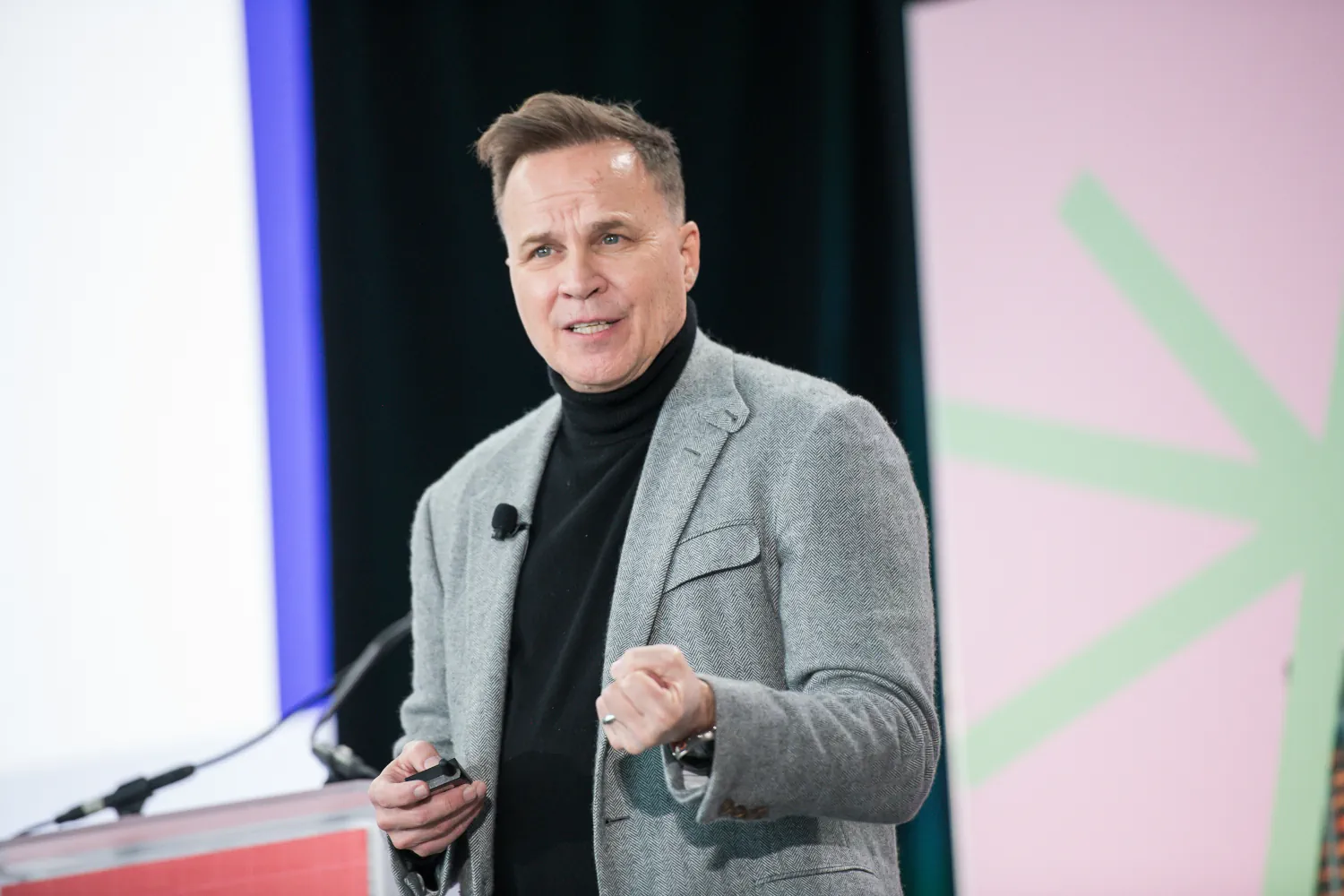
Kevin Kelley, Principal and Co-Founder, Shook Kelley
What makes you feel safe and secure in an uncertain world?
For architect Kevin Kelley’s young daughter, it’s Minnie Mouse that makes her feel safe. “Minnie is a constant in her life because it does something for her,” Kelley, principal and co-founder of Shook Kelley, said during a session at NRF 2026: Retail's Big Show.
Retail's Big Show
Stay up-to-date on the latest news and articles about Retail's Big Show.
People never grow out of the biological need for a sense of safety and the desire to form attachments, whether it’s to other people, objects or places. “In this kind of a dangerous world right now, where it feels like the institutions and large systems feel unsafe, we’re craving that sense of safety and that sense of attachment,” he said.
Kelley’s comfort comes from books, he said, and one of his favorite places to shop for books is the Barnes & Noble at The Grove, an open-air shopping center in Los Angeles. He’s gone every week since The Grove opened in 2002, he said.
The comfort and familiarity of his favorite Barnes & Noble store is by design, according to Shannon DeVito, senior director for books at Barnes & Noble Inc. “Barnes & Noble six years ago was very much a company on the brink,” DeVito said. “We were very much trying to be a traditional retailer instead of a bookstore, and there is a very big difference.”
That realization presented the struggling bookseller with an opportunity for a turnaround that has led to a total brand rebound. Barnes & Noble opened more than 60 new stores last year and is on pace to do the same in 2026, if not more. “We are really doubling down on that bookstore experience,” she said.
One of the biggest changes the bookseller made was to design stores for local interest. “We have over 700 stores, but they’re all different,” she said. Whether it’s displays featuring books about local sports teams and authors or community-building events such as bookfairs, holiday book drives, summer reading programs and the annual My Favorite Teacher contest, Barnes & Noble embeds itself in the local community.
In fact, the company hosts more than 100,000 community events each year. It’s also capitalizing on the creativity of in-store booksellers, who are encouraged to leave recommendation notes, create displays and decorate the store for special events and book launches.
“We totally got rid of the planograms and we taught the tenets of being a good bookseller,” DeVito said. “Localization has become so important to us, so really doubling down on who the local authors are … and taking those moments and creating a local aspect to them makes the bookstore feel like a community.”
That localization approach has also changed Barnes & Noble’s marketing, particularly on social media.
“Each store has their handle. They manage it themselves, with guidance and trust from us. They have chalk boards so they can make it feel very local and community-driven,” she said. “They run events. But their marketing is ground-level. We want it to feel really genuine and authentic and organic, because it is.”
Today, Barnes & Noble is happy to be considered a place where people linger and gather, where communities are built around a love of books.
“I’m so lucky we sell books,” DeVito said. “People absolutely judge books by their covers and stores by how they look. That axiom is older, but it does say a lot about how much impressions matter.”