



How Best Buy, Nordstrom and Target are tapping into marketplaces
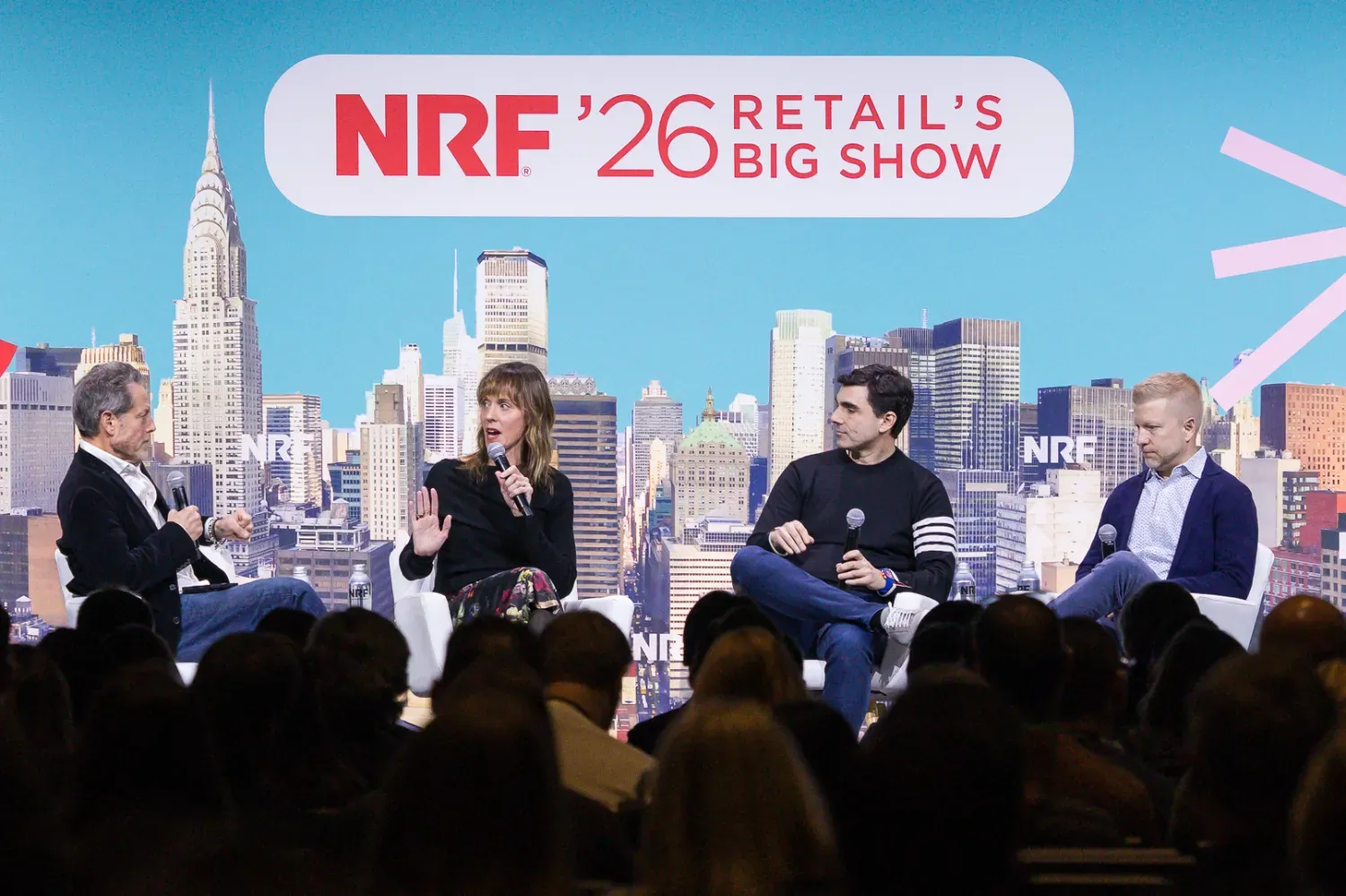
From left: Ken Pilot from Ken Pilot Ventures, Sarah Travis from Target, Miguel Almeida from Nordstrom, and Frank Bedo from Best Buy speak at NRF 2026: Retail's Big Show.
Marketplaces are now a key part of retail, with traditional retailers adopting digital platforms that allow third-party sellers to list products alongside the retailer’s own inventory.
For Best Buy, Nordstrom and Target, integrating marketplaces into their online websites wasn’t looked at as just a separate stream of business — it was part of the larger enterprise strategy itself, particularly when it comes to what Sarah Travis, chief digital and revenue officer for Target, calls “curation at scale.”
Retail's Big Show
Stay up-to-date on the latest news and articles about Retail's Big Show.
“When you think about Target, we are a company that’s known for curation of product —national brands, emerging brands, own brands and marketplace for the past seven years,” Travis said at NRF 2026: Retail’s Big Show. “And marketplace plays an enormous role in helping us to identify trends, so for an overall assortment strategy, it plays a really important role.”
Marketplaces also allow retailers to show and sell products they might not have the space to display in stores — even stores as large as Target or Best Buy. For example, Target’s marketplace includes furniture. “It does not make sense for us to be taking up a bunch of space in our store for big bulky items,” she said. “We moved to marketplace for that stuff and then opened up a really cool experience within the stores with something like décor, for example.”
More product was also the driver behind Best Buy’s marketplace, which launched in August, and is already a resounding success.
“We’ve got about 1,100 sellers since we launched … but our SKU count is up about 11 times from prior to the launch of marketplace, so, [we’re] incredibly excited,” said Frank Bedo, chief marketplace and ecommerce officer for Best Buy.
“The intent behind our marketplace was strictly centered around product expansion, everything from legacy iPhone cases to refurbished product. Even things like seasonal décor or life and sporting goods. So, you’re going to Best Buy to buy your TV for the Super Bowl. You can now walk out with a Chicago Bears speaker. Or even a Chicago Bears snuggy.”
Filling those product gaps with third-party vendors has allowed the Nordstrom marketplace to offer products in categories where there had been gaps in digital, including the under $100 price point category, according to Miguel Almeida, president of digital and customer experience at Nordstrom.
“Our marketplace strategy was first and foremost an enterprise and customer strategy. We launched marketplace to serve more customers on more occasions,” Almeida said. “We wanted to do that in a way that feels very uniquely Nordstrom. We were also very deliberate about not becoming the ‘everything store.’”
Rather, he explained, the marketplace has become a place to experiment with new categories, merchandise and brand offerings. “It allows us a lot more agility, speed and almost an ability to play in more categories in a risk-free way.”
So far, the experiment into marketplaces seems to be working, according to all three experts, but the key is to not treat marketplace like a separate, stand-alone entity.
“Organizationally, the marketplace team is directly supported by me and our digital organization, but it was never a digital initiative,” Almeida said. “It was an enterprise initiative, and it served a broader merchandising and customer strategy.”