





Experimenting with AI to connect and convert customers
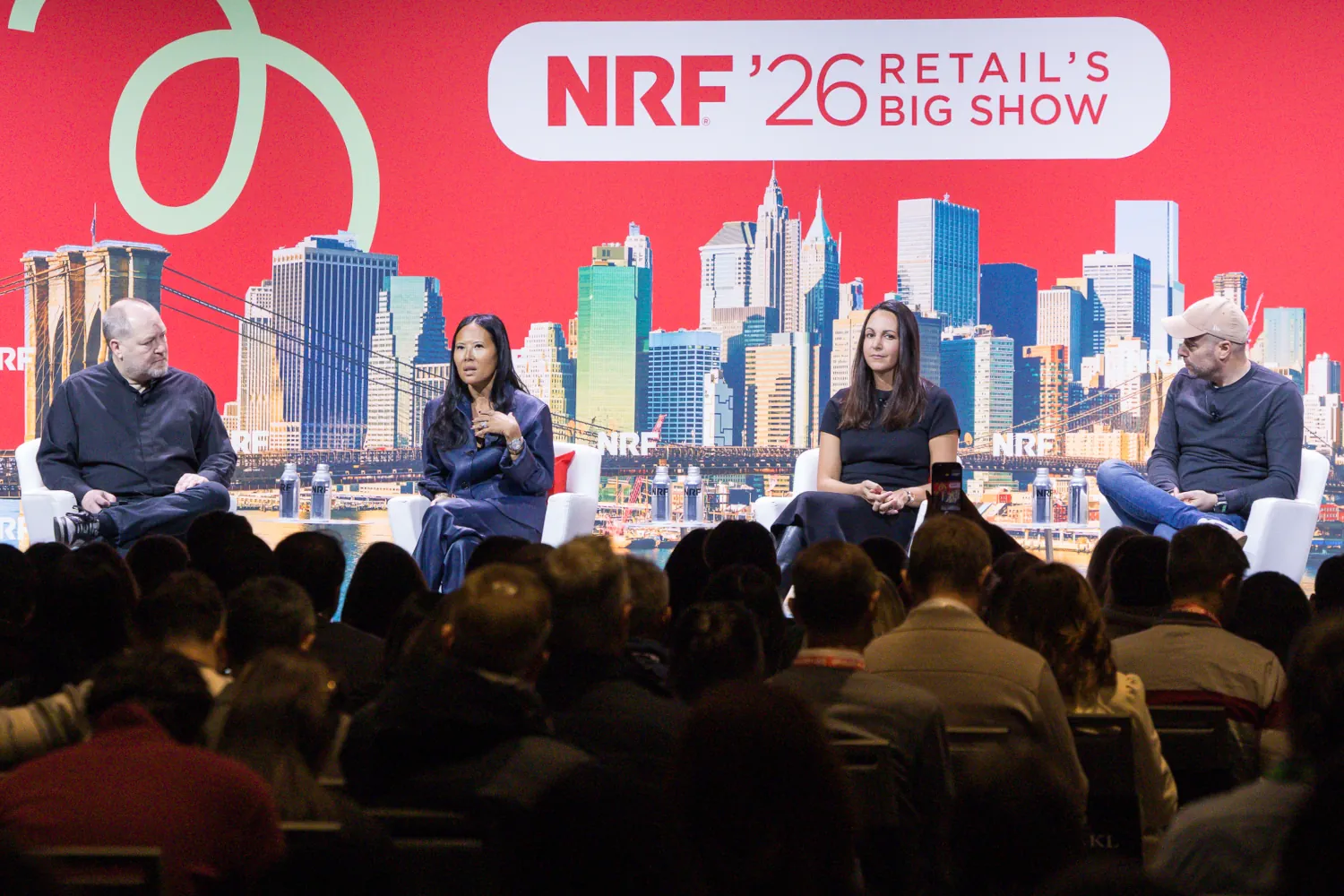
From left to right, Brendan Witcher of Think Recruiter, Linda Li of COS, Nadine Graham of Sephora and Mattias Haase of Zalando speak at NRF 2026: Retail's Big Show about the opportunities AI brings to their businesses.
Finding the right foundation makeup or the best sneaker for a specific demographic used to result in a maze of confusing — and irrelevant — options for customers. That problem multiplies for retailers in beauty and fashion that have to satisfy customer expectations for personalized — even individualized — suggestions.
“We serve 29 different markets with different languages, but … our customers and consumers, they have different style preferences. So, how do we combine this with the over 7,000 brands [we offer],” Mattias Haase, vice president of content solutions at European online fashion retailer Zalando, said at NRF 2026: Retail’s Big Show. “This is one challenge we have.”
Haase said that 78% of Zalando’s Gen Z customers come to the website just to explore, without having a specific product in mind. It’s during that discovery stage where tools powered by AI can make a real difference. “They are looking for information. For inspiration. They want to be entertained, and they are jumping back and forth within the funnel.”
Retail's Big Show
Stay up-to-date on the latest news and articles about Retail's Big Show.
To grab their potential customer’s attention, Haase and his team use AI to create animated, eye-catching product videos to replace photos. “A static image with a white background is no longer enough,” he said.
Sephora has also been an early adopter of AI, and has a number of tools to assist customers during all stages of the path to purchase.
“We approach AI like we do everything else within the business, which is to say, ‘How can we put the consumer first?’” said Nadine Graham, Sephora’s senior vice president and general manager of ecommerce. “Our job is really to keep that consumer journey as frictionless, intuitive, seamless and personalized as we can.”
One example: Sephora’s Skin Scan technology. Originally released in 2012 and relaunched in 2021, the tool was used in stores to assist sales associates in matching customers with the best foundation.
Now the beauty retailer has launched Smart Skin Scan, which allows customers to get a skin consultation and address skin concerns via uploaded selfie. And for those potential customers with further questions, Sephora launched an on-site chatbot that can provide educational content and recommendations in a conversational format.
The results have helped make the case for even more AI integration, Graham said. Usage of the chatbot has tripled since it launched last year; for clients who add a product to their basket directly from the chat, Graham said they are seeing higher conversion. And those that do convert have 30% higher basket sizes.
All this data was good news for Linda Li, managing director for COS North America. The H&M Group fashion brand is still in the experimentation stage with AI, Li said, and is taking a thoughtful approach to when and where it will be implemented.
“When it comes to AI, in some ways it’s a tool, but it’s also an evolution of the entire operational side of the business,” she said. “It’s important for us to take deliberate and intentional steps to embrace this.”
Nevertheless, COS is using AI to focus on content diversity and ensuring media effectiveness, as well as advanced analytics to make its marketing models even more relevant.
“We’re a global brand. You can’t take a global, one-size-fits-all approach when you are a global brand,” Li said. “You want to be truly, locally relevant for your customers, and so what we are looking into is how to be able to work with media and content diversity in a way that operationally makes sense as well.”