





How CVS Health and Magalu transformed their businesses into ecosystems
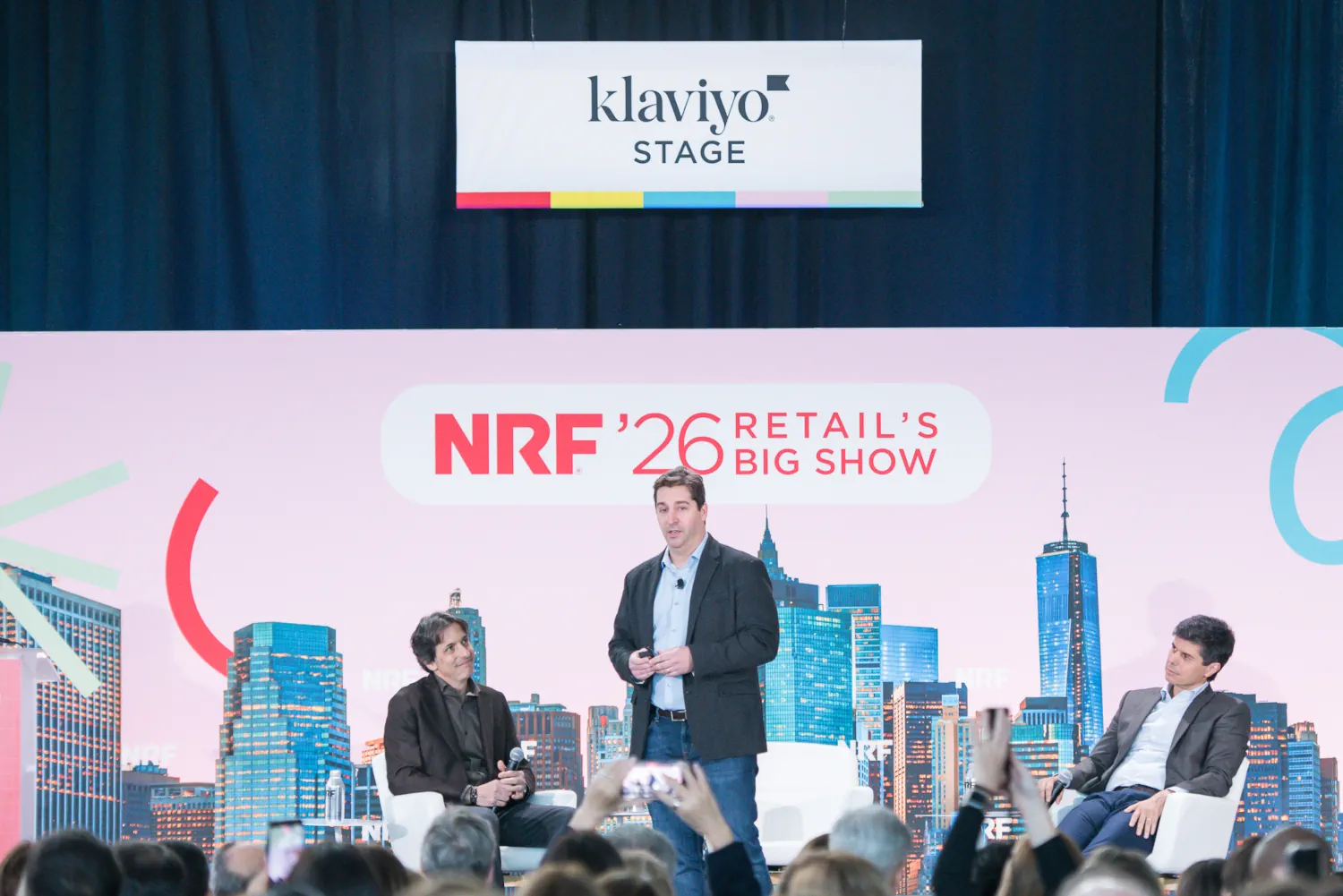
Gui Serrano of CVS Health, center, speaks about business transformation at NRF 2026 with Magalu's Frederico Trajano Inácio Rodrigues, right, and Alberto Sorrentini of Varese Retail.
There’s no official roadmap to transforming a business into an ecosystem. That said, a key step on the journey is to strategically leverage what’s already in place.
For health solutions company CVS Health, that has meant extending the trust, affordability, accessibility and efficiency of pharmacy to healthcare as a whole. The first Consumer Value Store, founded in 1963 in Massachusetts, has grown into an expansive ecosystem that integrates “care, coverage and community.” In addition to its more than 9,000 pharmacy locations, CVS Health owns Aetna, with insurance coverage for about 30 million people. Then there’s the presence of MinuteClinic in select CVS Pharmacy locations; it’s the largest provider of retail health care in the United States.
All told, according to Gui Serrano, CVS Health’s assistant vice president, corporate strategy and development, about one-third of the U.S. consumer population interacts with CVS at some point in their lives.
Serrano addressed a standing-room-only crowd of NRF 2026: Retail's Big Show attendees on new business models. He was joined by Frederico Trajano Inácio Rodrigues, CEO of leading Brazilian omnichannel retailer Magalu.
Retail's Big Show
Stay up-to-date on the latest news and articles about Retail's Big Show.
CVS Health didn’t come together by accident, Serrano said. “There was a vision behind it.” And the customer has remained at the center.
“A lot of what we did was through M&A,” he said. “We acquired the best of the best companies out there. Little by little we created these anchors around the consumer, and then after the anchors were established, we provided the connective tissues.”
Instead of being “transactionally focused,” he said, CVS Health sees consumers as members, viewing them from the perspective of a lifetime. That change in mentality is mirrored in all areas, including leadership and structure.
Magalu, meanwhile, has grown from a small gift shop founded in the 1950s to a retail giant, with 35 million active customers as of December 2024; 1,245 physical stores; 472 million online visits; and total 2024 sales of $66 billion Brazilian real.
Further, the company has long invested in technology, most recently introducing an end-to-end shopping experience leveraging different WhatsApp components in each step of the journey.
Magalu is also home to “Lu,” a virtual 3D influencer first introduced in 2009. She was designed as a virtual sales assistant, a chance to bring the personalized touch of the store experience to ecommerce. Since then, she has amassed tens of millions of followers across social media platforms, taken part in dozens of sponsored collaborations with leading brands, and landed on the digital cover of Vogue Brazil. Naturally, Lu is featured throughout the WhatsApp integration.
Magalu has also launched a new department store concept in Brazil: Galeria Magalu.
“We wanted to materialize the ecosystem in a physical space,” Trajano said. A large number of the company’s acquisitions were only digital assets, making them difficult to showcase. The new retail destination is billed as a “hub for culture, technology and experience” — as well as amusement park for influencers — and includes immersive elements such as a theater and art gallery.
Trajano spoke as only the fourth leader of the almost 70-year-old company; Magalu was founded by his aunt. She and others, he said, “taught me that we can change what we do. We can change how we do it. But we cannot change who we are.”