




How immersive, interactive experiences are transforming retail
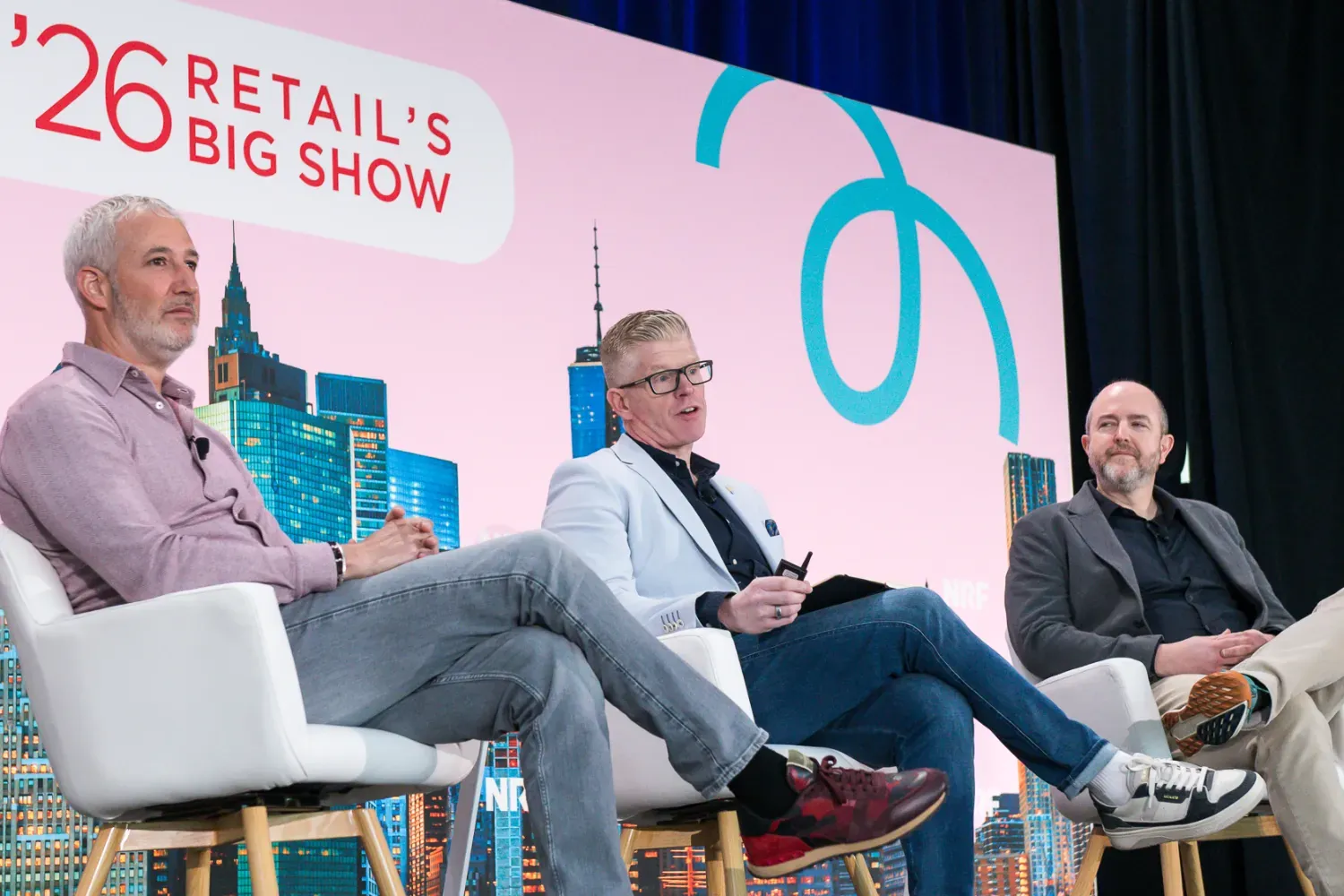
From left: Ariel Haroush from Outform, Michael Budzisz from Dick’s Sporting Goods and David Littlefield from Outform on stage at NRF 2026: Retail's Big Show.
Ariel Haroush, CEO and founder of retail experience innovation agency Outform, has been pondering some heady questions of late: “Can retail move at the speed of culture? Can we move as fast as the consumer?”
It’s key to maintaining relevancy, he told the crowd during a session at NRF 2026: Retail’s Big Show. Haroush watched the way his kids consume social media as a data point. “I asked myself, ‘Why is social media so addictive?’ Because it’s always changing. And adapting. And evolving. There’s always something new, so it’s interesting.”
Retail's Big Show
Stay up-to-date on the latest news and articles about Retail's Big Show.
Going into a store, however, doesn’t usually provide the same experience. Haroush wants more. He wants to be surprised and delighted. And he’s doing his best to make it happen.
In addition to creating the “Future Stores” concept in London — a tech-driven, immersive space where brands can create on-demand flagship experiences with interactive zones and large LED screens — Outform works with retailers such as Dick’s Sporting Goods to deliver environments where “anything is possible.” One thing Outform doesn’t do, however, is create digital noise.
Dick’s House of Sport, the 100,000-square-foot experiential retail concept, is a prime example of getting it right. Haroush was joined by Michael Budzisz, vice president of in-store creative and innovation at Dick’s Sporting Goods, for the session, breaking down how it all happened. David Littlefield, managing director EMEA at Outform, moderated the conversation.
Budzisz highlighted the importance of starting with the desired experience in each area of the store, rather than beginning with the technology.
“Backing up into it that way, we found we were able to get better buy-in,” he said. “We were able to get the brands there in terms of understanding what our strategy was to retail. It’s been an amazing journey. We’re just over a year into it, and it’s going really well.”
Dick’s is known for great product, great product storytelling and great service, he said, “and digital happened to be something that played up very well to those strengths.” The company is now in a good position for scaling, “and we’re not having to force it. It actually fits nicely into our store environment.”
Experientially speaking, this includes elements like the ability to “lift and learn,” where a consumer can pick up a product like a shoe, and be rewarded with brand content. That might mean technical aspects, or national campaigns. There’s also a combination of digital on the floor and on the wall, creating a dynamic, immersive and ever-changing encounter that draws on the emotions.
“You’re not designing for tomorrow, right?” Haroush said. “It’s an ever-changing platform. How will the store adapt a year from now, two years from now, three years from now? How do you do a store takeover? What is that going to do to the atmosphere, when you’re entering the store? How do you build drama? How do you elevate the brand? How do you not create digital noise? No one is going to have a Las Vegas or Times Square kind of thing. You really want to make sure you’re elevating the proper experience.”
Haroush spoke about the triangle of technology maturity, content accessibility and shopper expectations continuing to drive the industry forward. But content, he said, “is everything,” especially when used to enhance the visual merchandising.
“You don’t necessarily take your TV commercial and just stick it on the walls. It needs to be contextualized to the place of merchandise. It needs to take the understanding of the form and the shape. It needs to have a deep knowledge of conversion and visual enhancement. I think that’s where, today, content is driving that shift for retailers. It’s a different mindset.”