



How to build meaningful creator partnerships
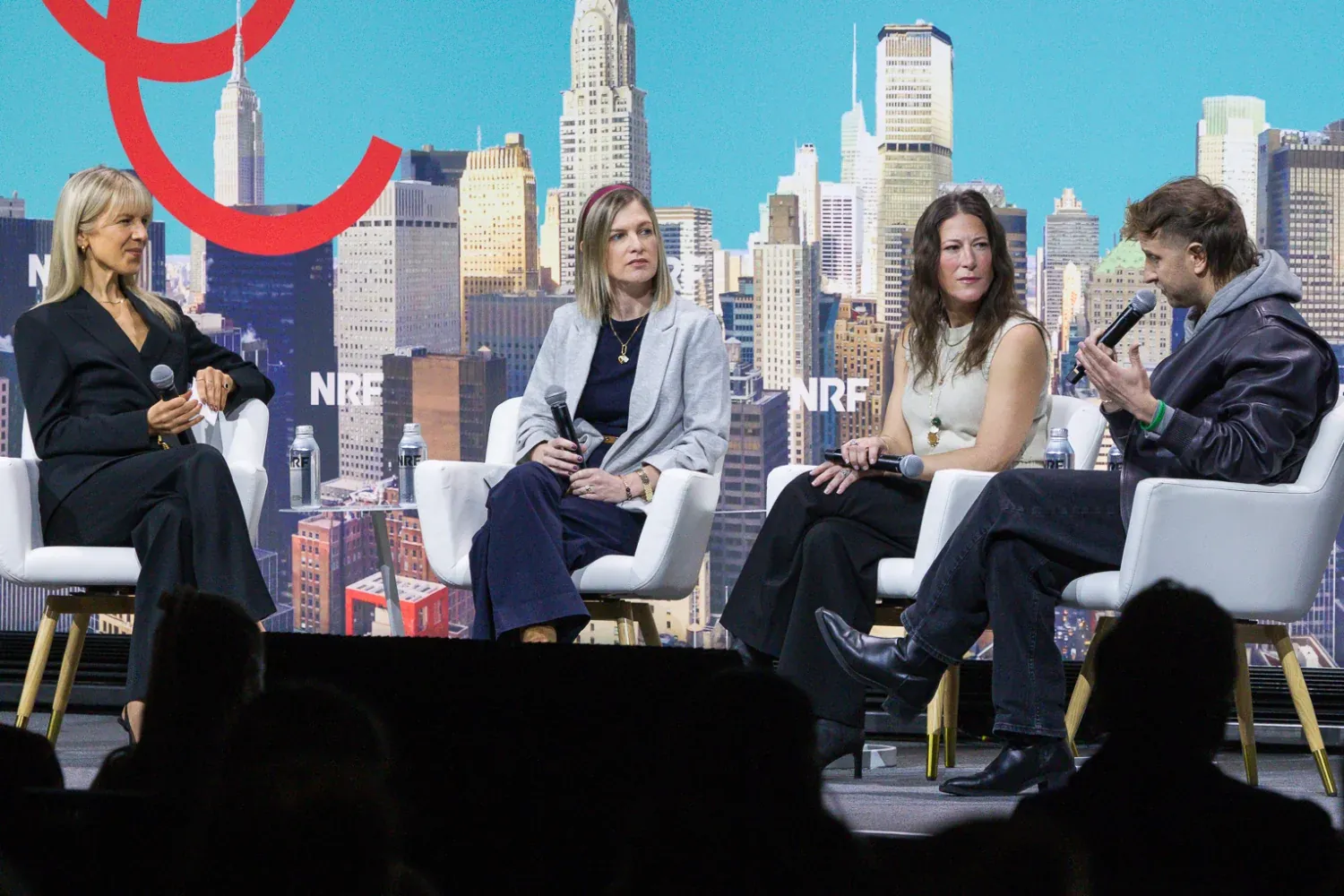
From left: Sarah Henry from Walmart, Ashley Schapiro from American Eagle and Noah Gonzalez from H&M Americas at NRF 2026: Retail’s Big Show.
In the realm of influencer marketing, it’s impossible to predict what will happen next. It’s challenging enough to keep up with the “right now.” In a time when relevance has shifted from days to hours to minutes, three leaders with as much expertise in the ever-evolving field as anyone offered their thoughts.
Sarah Henry, head of content, influencer and commerce at Walmart; Ashley Schapiro, vice president of marketing at American Eagle; and Noah Gonzalez, head of brand PR and talent relations at H&M Americas, spoke about influencer marketing at NRF 2026: Retail’s Big Show. The session was moderated by Jill Manoff, editor-in-chief of Glossy and Modern Retail.
Retail's Big Show
Stay up-to-date on the latest news and articles about Retail's Big Show.
The wide-ranging conversation explored who today’s influencers and content creators are (whether big-name celebrities or simply anyone with a phone), what’s important to them, where and how they’re building their communities, and how brands might best work with them. The panelists also touched on ROI, and how these partnerships fit into the overall marketing mix.
H&M’s Gonzelez talked about seeing creators being used in “almost every layer,” as well as outperforming branded assets “every single time, and not by a little, but a lot.” People innately want to see the people they follow and champion work with big brands and get their pay, he said. It gets them excited, and that excitement spills over.
“I can guarantee you, if there’s a priority within the organization from a business perspective, it will have a large-scale backing influencer strategy plan,” he said. “That is just categorically the case now.”
From the perspective of the creators, Walmart’s Henry said she’s been hearing “a ton” from them lately that “their brand voice matters.” One of their biggest pain points is being asked to do a brand deal in which the message feels canned; they don’t want to feel forced to deliver a message to a community they’ve put significant time and effort into building.
In the early days, Walmart did this, too; the briefs were “a little bit too restrictive,” Henry said, and not in the best interest of the creators, their audiences or the company’s performance. Today, there’s more of a focus on providing ideas and product discovery inspiration, but letting the content creators and influencers do their thing in the way that will best resonate with their followers, she said.
There’s also increased awareness about where these people are doing it; the panelists spoke about leveraging different platforms for different things. Pinterest has been a “bright spot” of late, American Eagle’s Schapiro said, and the panelists agreed that Substack has been coming on strong with longer-form content.
“That age-old strategy of right content, right platform, relevant, right moment, is even more important, because there is so much choice,” Schapiro said. “One of the things that I always talk to my team about, when you are a big brand, like all of ours … where you’re lucky enough that you get to participate with all of these amazing platforms, is they each need a reason for being.”
The content on each of the platforms must be different, or people won’t consume it. “We are participating in all of them, but we are showing up in a unique way on each one, based on what the role of it is,” Schapiro said. TikTok, for example, used to be the place that made her laugh, and now it’s the place that makes her spend money.
It’s important to dig into each platform’s purpose, how the brand’s personality comes to life there and how creators can be leveraged for each one. At the same time, the right balance between the brand and the people who amplify it is key. The brand, Schapiro said, must continue to be the hero.