





The shift from ranking to relevance
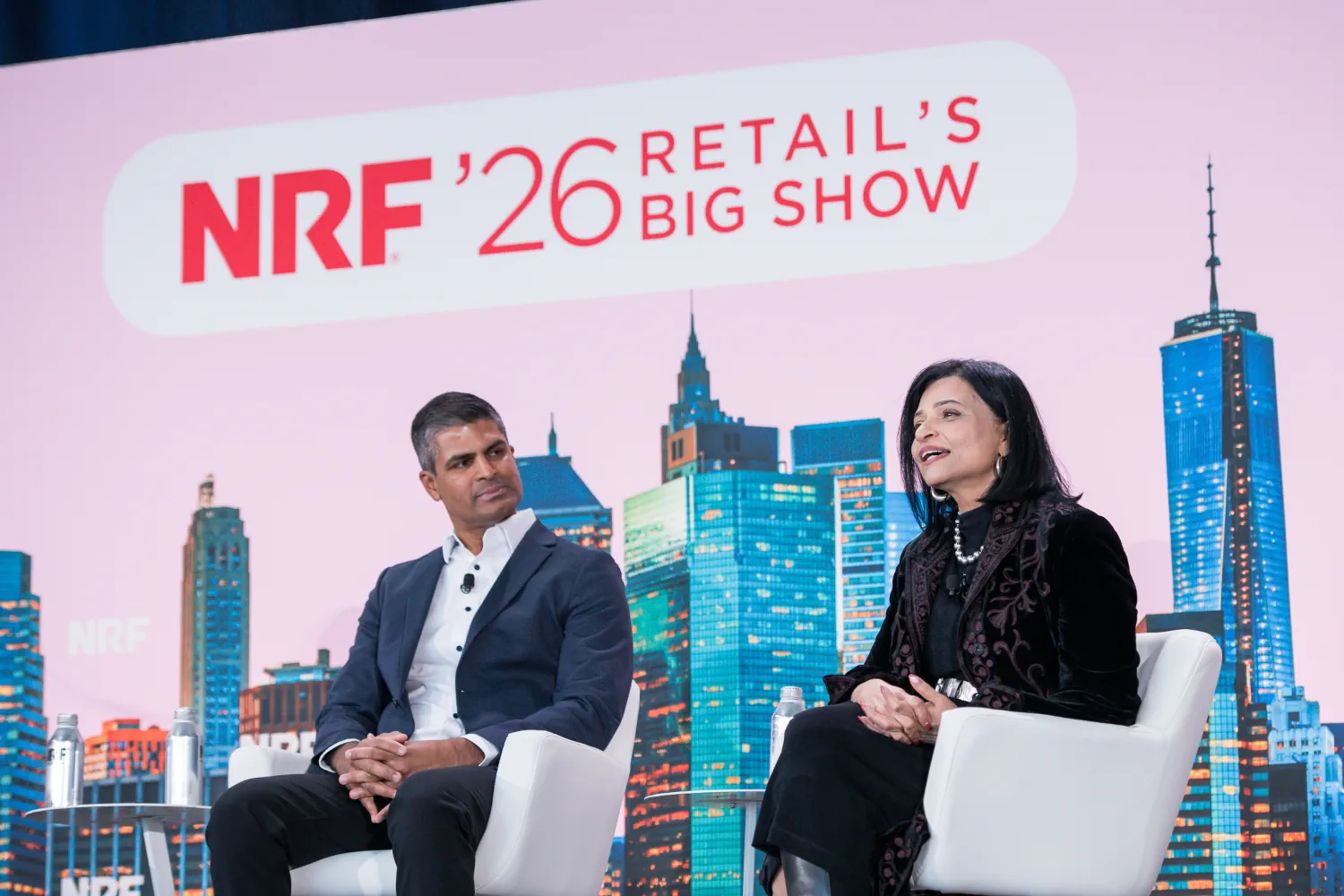
Samir Desai, executive vice president, chief digital and technology officer of Abercrombie & Fitch and Neelima Sharma, SVP omnichannel and ecommerce technology of Lowe's Companies, speak at NRF 2026: Retail's Big Show.
On Black Friday, when shoppers lined up early outside Lowe’s stores to receive limited-edition buckets of goodies, one turned to “Mylow,” the home improvement company’s AI-powered virtual assistant, for help. The consumer noted his position in line and then asked, “Do you think I’m going to get a bucket?”
Retail's Big Show
Stay up-to-date on the latest news and articles about Retail's Big Show.
This wasn’t just about information, said Neelima Sharma, senior vice president of omnichannel and ecommerce technology with Lowe’s Companies Inc. It was also about trust, relationship and comfort level — and the belief that an AI tool could make judgments on his behalf.
Sharma relayed the story during a session at NRF 2026: Retail's Big Show that explored how generative AI is reshaping the search landscape, and how consumers and companies are responding in kind. She was joined by Samir Desai, executive vice president, chief digital and technology officer for Abercrombie & Fitch Co.
“We’re moving away from basic keywords to much more of a conversation,” Desai said. “The digital product discovery experience is finally catching up with the in-store experience.”
When someone walks into a store looking for something, he said, they don’t shout keywords at an associate. They speak in natural language, including context and sharing intent. Consumers have begun doing the same online, with AI serving as trusted advisor. Generative engine optimization, then, is the digital strategy of ensuring content is easily available, understandable, clear and concise for search engines that use generative AI.
Further, Desai said, there’s a shift from “single view of the customer” to “single view of the product.” Single view of the customer isn’t going away, he said. But there’s a new focus on product data and attributes, and the quality of that data “has never been more important than it is today.” It’s crucial to consider what type of prompts consumers might use.
He gave the example of a customer searching not just for a dress, but specifically looking for a dress to wear to a concert the following weekend in Nashville. The company is learning to provide more than just basic product descriptions and fit information; there’s also wearing occasions and use.
Sharma, meanwhile, spoke about “meeting the customer where they are.” It’s now more about relevance than ranking, and a company’s ability to establish itself as an authority in its domain. It’s also about moving beyond providing information to actually solving problems. This looks, for example, like a consumer uploading a photo of a damaged wall and asking how to fix it. The response would include suggested products as well as information, instructions and a video tutorial.
Of course, the consumer isn’t just typing questions and prompts into a company website search bar. Google’s introduction of AI Overview served as an inflection point, and it’s important for a company to show up in those overviews, too.
“In Google overviews, it’s not 10 different links,” Desai said. “It’s three things that come back at the top.” Companies and brands that aren’t included risk increasing irrelevance."
The good news is that, even with all the change, one thing remains constant: It’s still about building communities of people who love the brand and love the product.
“Back to the relevancy and the trust and all of those points,” Desai said. “That happens because real humans are out there advocating for how great your brand is and how great your products are.”