



Why retailers are moving beyond shrink to measure total retail loss
)
NRF's David Johnston speaks at NRF PROTECT 2026.
Profit erosion no longer solely sits on a shelf in a retail store. Profit loss shows up in ecommerce fraud and lost sales, supply chain theft and discrepancies, across operational breakdowns and broader elements of enterprise risk. As retail organizations have evolved into blended channels and converging environments, a shrink percentage focusing on physical store loss is a limited indicator of total loss. Retailers are increasingly using total retail loss frameworks to measure these interconnected forms of risk across the enterprise.
Why shrink is no longer enough
At NRF PROTECT 2026, retail leaders and industry experts across various educational sessions discussed the value of total retail loss — a framework that measures loss across retail operations, including theft, fraud, inventory inaccuracies, supply chain disruptions and other operational risks that affect profitability.
A traditional shrink metric still has value, but against today’s retail environment it is increasingly limited. Shrink calculations differ from company to company. Certain areas of loss outside of retail stores may not be calculated. Even sales volume can result in an inaccurate accounting for loss.
Shrink is a lagging indicator — useful for describing what happened, but not ideal to determine where losses are building, where controls are weak or preventing loss before it reaches the profit and loss statement.
A broader view of retail risk
Total retail loss models shift the focus and benefits functions across the entire retail business. It can surface theft patterns, inventory inaccuracies and operational compliance in retail stores. It can connect sales and return thefts and anomalies with transactions occurring between stores and ecommerce activities.
TRL metrics can identify supply chain issues across multiple distribution points, helping to identify and determine issues that may rest with third-party logistics, last-mile delivery or within internal distribution channels. Total retail loss provides a broader view of loss and supports strategic decision-making to curtail future loss.
Connecting loss to business performance
Suni Shamapande, principal at PricewaterhouseCoopers, spoke of the need to change the narrative around loss as a panelist on a session on transforming LP/AP to meet today’s retail complexity. “C-suite conversations are driven by metrics such as P&L impact, margin improvement and operational efficiency,” he said. “Total retail loss is a stronger platform for asset protection to speak in those terms and demonstrate how loss insights shape enterprise priorities.”
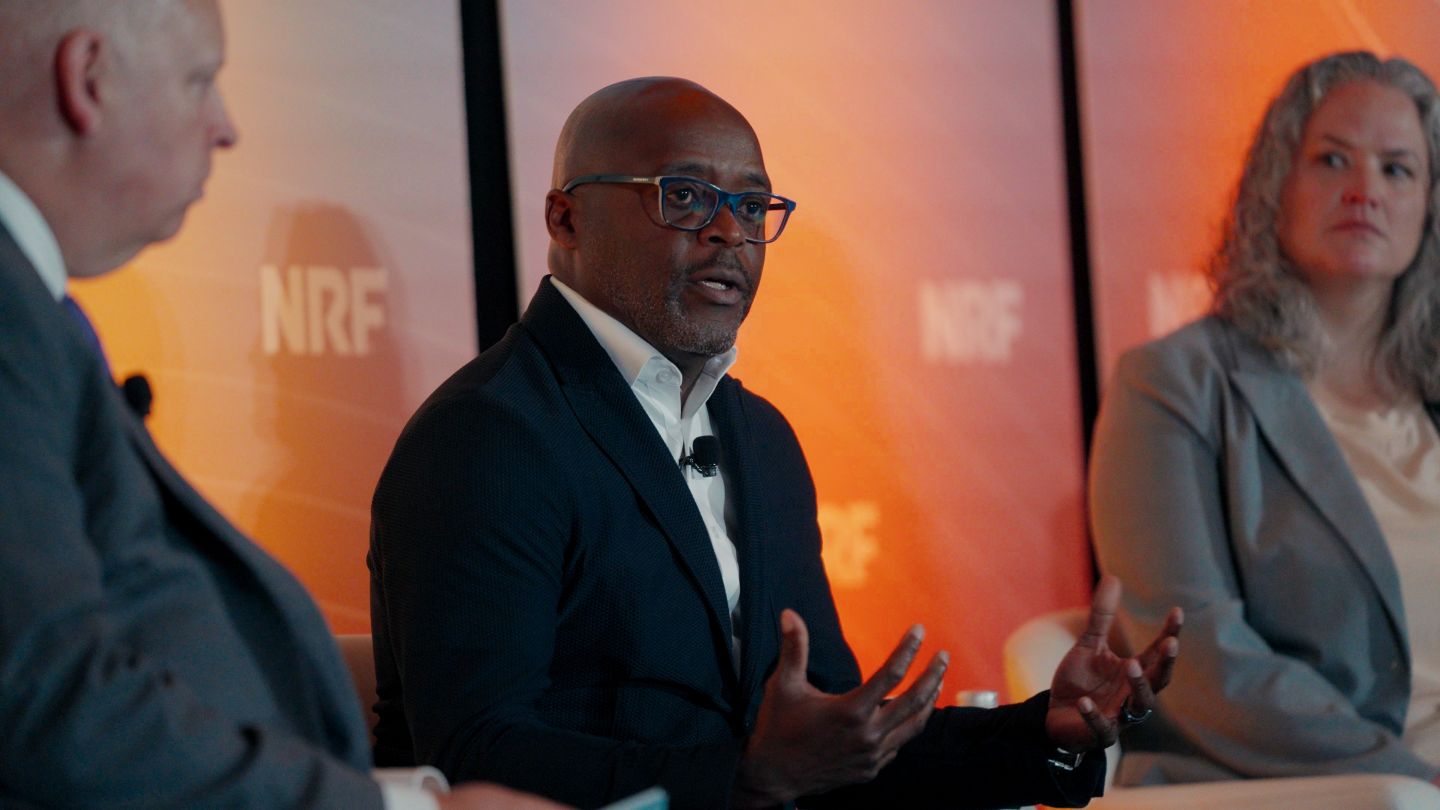
PwC's Suni Shamapande speaks at NRF PROTECT 2026.
Discussions at NRF PROTECT made clear that asset protection and loss prevention teams are evolving into a wider enterprise security risk discipline. Leading loss prevention and asset protection teams are building partnerships and driving data analysis across various company functions, identifying all areas of risk and loss, using their expertise to become trusted advisors to other functions — helping them build out, unify and identify areas of loss earlier than what may show on a shrink report.
John Matas, founder and principal of Blacklight Strategy, spoke to attendees about how to break through the “digital exhaust,” the enormous amounts of siloed information across an organization. He spoke of the need to unify in-store and digital data, audit that data and make it accessible for asset protection, operations and other functions for a complete view of a retailer’s ecosystem.
“When store, fraud, digital and supply chain data are connected, retailers gain deeper visibility into root causes and can act faster and more effectively against loss,” he said.
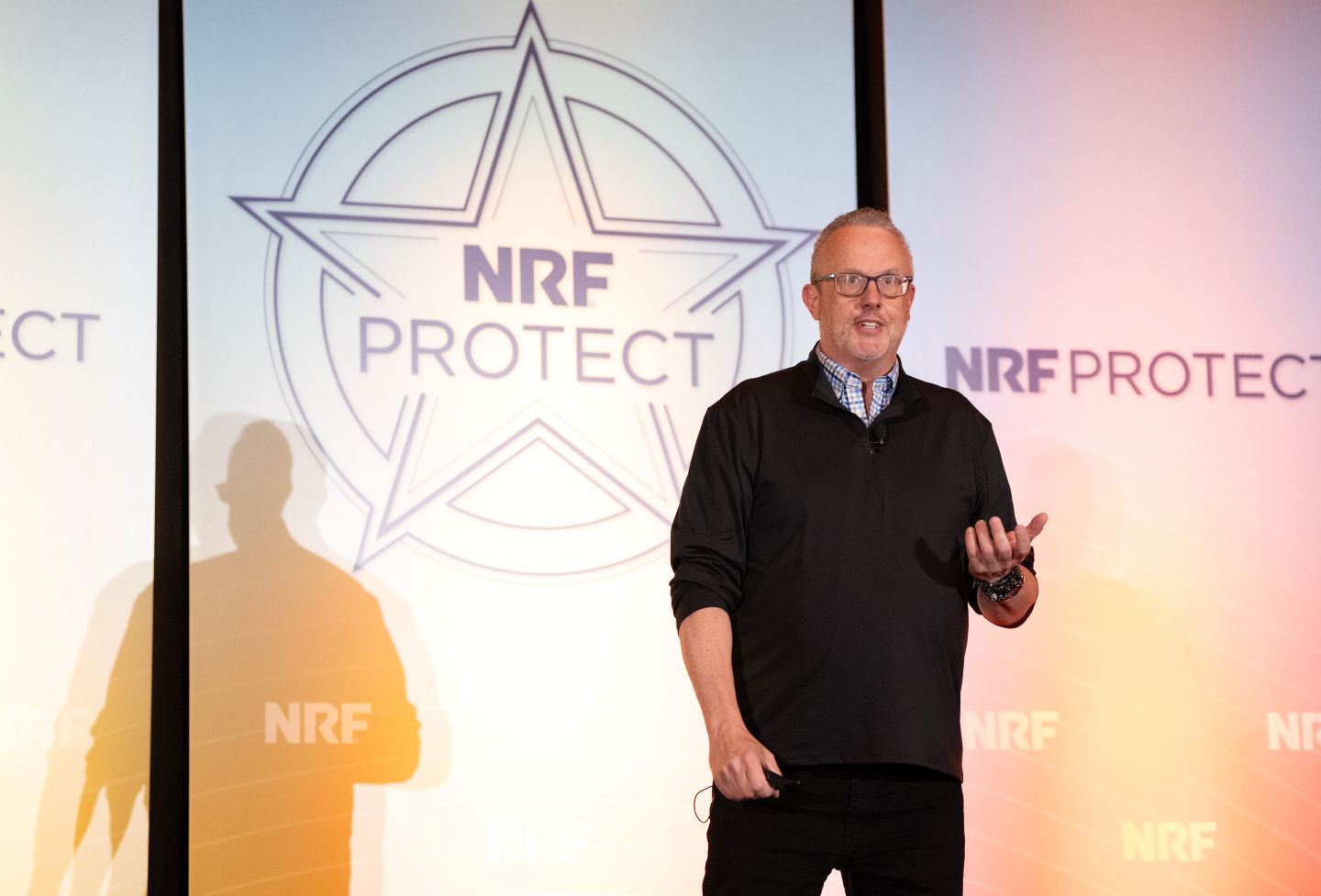
Blacklight Strategy's John Matas speaks at NRF PROTECT 2026.
The framework involving total retail loss looks across the entire business, connecting loss measurement to performance. It aligns the conversation with enterprise concerns, not just apprehensions, case counts or a single metric involving shrink. It builds conversations around profitability, resilience and brand value.
Retailers that embrace TRL will be better positioned to prevent loss earlier, allocate resources more intelligently, strengthen controls and communicate value at the highest measurements of the business. In a retail landscape where loss is becoming more complex, total retail loss is not just better metrics, it is a discipline to create a more resilient organization.