



Finding the hidden revenue in reverse logistics
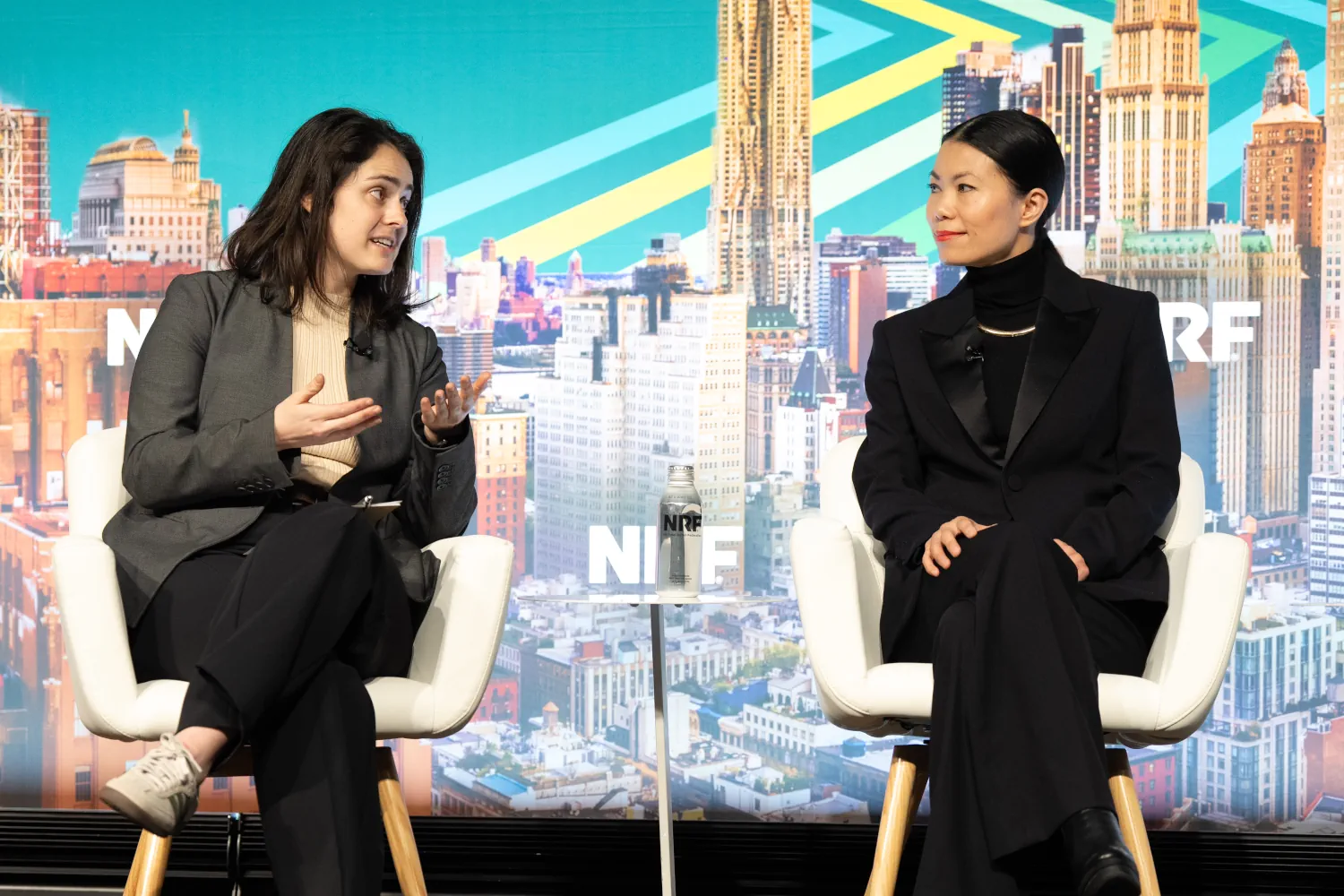
Aly Bryan, ventures investor at Closed Loop Partners and Janie Yu, general partner at LFX Venture Partners sit on the NRF Rev stage.
The high energy from the opening of NRF Rev 2026 carried into day two, as speakers examined the role of returns in circularity, profitability strategies and innovation in managing reverse logistics, offering insights into both the challenges retailers face and the opportunities emerging from more sophisticated reverse logistics models.
Central to these challenges and opportunities is the customer. If the investments and changes do not resonate with the customer, then the innovations and changes are for naught. How can retailers tell if they are successful in reimagining their reverse logistics supply chains? Flex’s Director of Global Services and Sales Tetyana Buhera said it best: “The best endorsement for refurbished goods is a happy customer.”
The day opened with a discussion on how refurbishment programs can transform returned products into strategic assets. Speakers from Philips and Flex shared a case study that demonstrated how Philips built a successful refurbishment program across Europe by highlighting collaboration between a global brand and its manufacturing partner.
NRF Rev
Stay up-to-date on the latest news and articles about NRF Rev
According to the speakers, success in refurbishment depends not only on technology but also on cross-functional alignment among product design, logistics, sustainability and commercial teams. “With Flex, we’re able to collect data to improve product designs and introduce new products,” said Josse Ruiter, refurbishment lead for Phillips Personal Health.
Building on that foundation, several sessions explored how returns, excess inventory and end-of-life products are increasingly viewed as inputs into new value streams. Retailers and manufacturers are leveraging resale, refurbishment, recycling and material recovery to extract incremental margin while meeting rising expectations for environmental responsibility.
“There’s money there [in returns]. Don’t overlook it,” Alex Goldelman, CFO of UNIQLO North America, told the audience.
Resales are growing at a fast clip, led by Generation Z consumers, as noted by ThredUp’s Chief Strategy Officer Alon Rotem. According to ThredUp’s 2025 Recommerce Report, the global secondhand apparel market is expected to reach $367 billion by 2029, growing 2.7 times faster than the overall global apparel market.
The growth in resale has created a need for transparency between the platform provider and the brand. “We work with our brand partners in a very transparent way,” said Craig Hosie, president of recommerce platform Rebel. “They’re the experts, and we encourage them to help develop the standard operating procedures to build a successful resale strategy.”
Speakers also discussed the hidden costs of reverse logistics, including transportation and labor costs, markdown risk and inventory obsolescence. Abercrombie & Fitch Senior Director of Returns, Fraud and Abuse Rob Sondergaard told the audience, “It’s really important to have sharp forecasting. This drives the amount of labor needed to prepare stores.”
When executed well, resale also strengthens brand loyalty and extends product lifecycles. Trust is an important part of the success equation as well. eBay’s General Manager for U.S. Fashion Garry Thaniel emphasized the importance of trust, sharing that eBay’s “secret sauce” is trust in its tools, the platform and community.
Venture capital and industry investors highlighted how emerging technologies are accelerating the transformation of reverse logistics. They emphasized that the most compelling solutions are those that integrate easily into existing retail operations while delivering measurable cost savings and improved customer experience.
“You have to solve a real problem that retailers have,” said Janie Yu, general partner at LFX Venture Partners. “What makes you different, and how can you solve more problems and add value for retailers?”
The sessions made clear that reverse logistics is a strategic lever for revenue growth, customer loyalty and sustainability. When retailers align data, technology and cross-functional teams around the customer experience, returns, refurbishment and resale can evolve into profitable, trusted value streams.