




Reverse logistics leads the way to new revenue streams and other opportunities
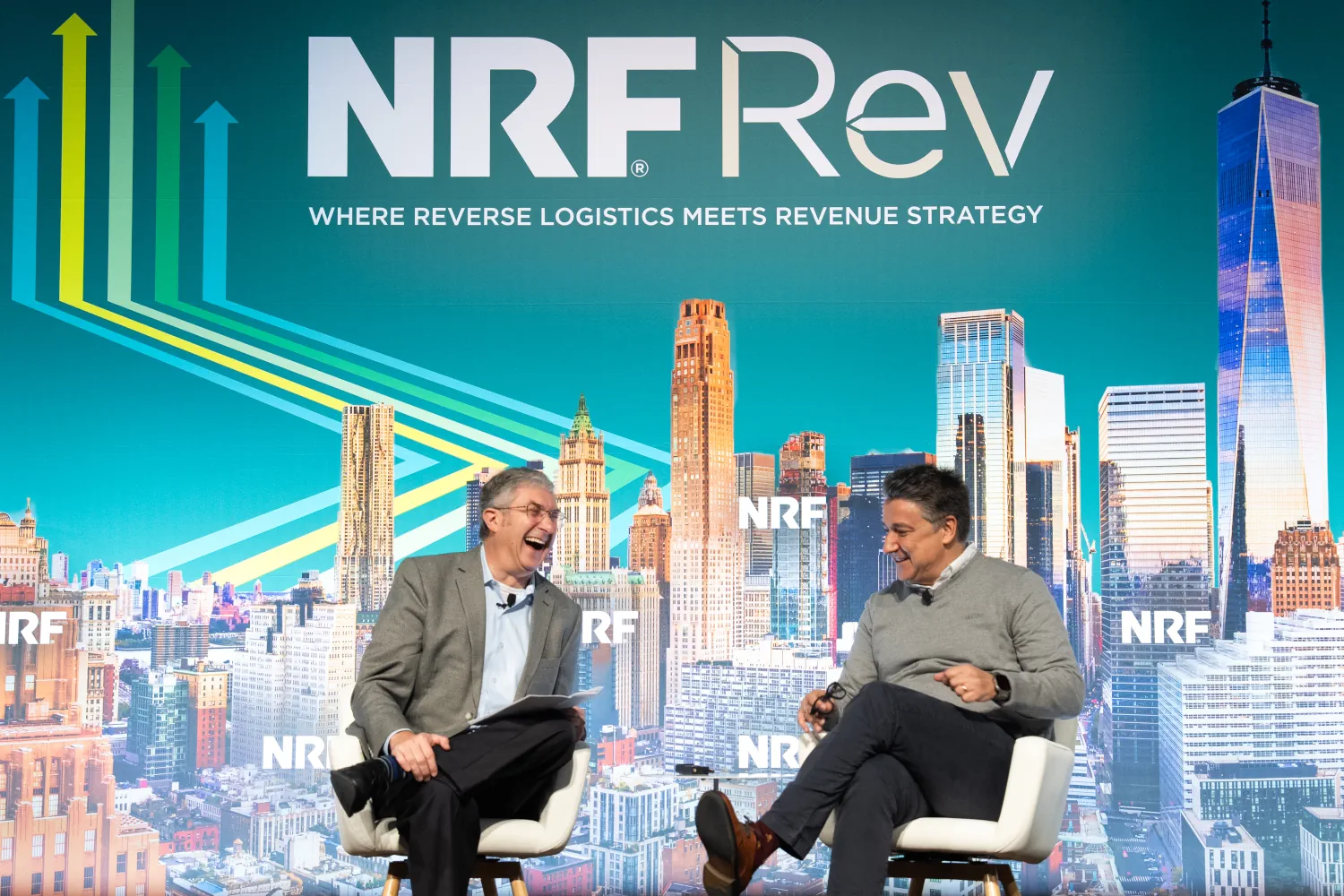
NRF's Scot Case, left, and Javier Quiñones of IKEA's parent Ingka Group at NRF Rev 2026.
NRF’s newest conference kicked off with a clear message that reverse logistics and circularity are important strategic components shaping the retail industry. Opening NRF Rev 2026, Scot Case, NRF vice president, corporate social responsibility and sustainability, reminded the audience, “Someone’s unwanted product is someone else’s treasure.”
Throughout the first day, speakers demonstrated how they were able to transform unwanted products into treasures by rethinking how products moved through reverse supply chains.
NRF Rev
Stay up-to-date on the latest news and articles about NRF Rev
Among other things, a reverse supply chain should include centralized return hubs, automated inspection and sorting, AI-driven routing decisions and refurbishment capabilities, enabling retailers and manufacturers to reduce costs while shortening the time to recover value.
When executed well, these capabilities not only lower operational friction but also improve customer experience by enabling faster refunds, exchanges and resale availability.
According to HP’s Senior Manager for North American Returns Operations Julie Ryan, the company mainly uses spreadsheets to manage product dispositioning and the end-to-end reverse logistics process. However, “what’s important to the company is speed, and one of our pain points is where the inventory is,” she said. “We want to know how soon we can resale a product.”
This year, HP is exploring artificial intelligence algorithms to reduce turnaround times and provide visibility across the reverse logistics supply chain.
By reinventing reverse supply chains, returns and overstock are considered assets that can be optimized through advanced analytics and AI. Retailers are improving recovery rates and stabilizing inventory flows by applying pricing intelligence, demand forecasting and inventory visibility to business-to-business resale channels.
Target’s Senior Director of Returns and Recommerce Lindy O’Brien, for example, discussed the retailer’s journey in redesigning its reverse logistics and resale strategy, beginning with its initial approach as a “one size fits all” to evolving just over the past few years with technology investments, expansion of returns hubs and the help of reverse logistics partners such as B-Stock.
Director of Reverse Supply Chain for Amazon Device and Services Colleen Robinson told attendees she starts each day by asking, “What’s my customer experiencing on the returns side?” Everything begins with the customer, Robinson told the audience.
As such, rather than viewing returns as a necessary inconvenience, retailers are increasingly positioning them as an opportunity to strengthen loyalty. AI-enabled returns platforms are helping reduce friction, prevent disputes and personalize outcomes such as exchanges or credits.
IKEA found that consumers who received vouchers through its select buyback service spend, on average, three times more in stores, according to Javier Quiñones, former IKEA USA CEO who was recently promoted to commercial manager for IKEA’s parent Ingka Group.
Beyond managing returns, extending product lifecycles by designing products with repair, resale and reuse in mind, while reducing waste and emissions, is equally important. By rethinking product lifecycles from initial sale through end-of-life, companies can simultaneously accelerate upgrade cycles, smooth demand volatility and support sustainability goals.
Quiñones said IKEA has embraced circularity since day one. “IKEA’s founder Ingvar Kamprad always said, ‘nothing goes to waste’,” he said.
The importance of partnerships was also emphasized. As regulatory pressure increases and sustainability expectations rise globally, retailers are seeking partners that can help them divert products from landfills while still capturing economic and social value.
As an example of such partnerships, President and CEO of Goodwill Industries International CEO Steve Preston highlighted the organization's partnership with Fortune 500 retailers and recyclers to manage returns more efficiently and responsibly. Ryan also highlighted partners that run HP’s returns operations while HP manages the standard operating procedures.
Reverse logistics is no longer a cost center, but a strategic lever for revenue recovery, customer loyalty, and sustainability. By investing in technology, redesigning reverse networks, and building strong partnerships, retailers are turning returns and overstock into measurable business assets.